Commercial HVAC maintenance in Sarasota and Manatee County isn't optional once you're running a business on the Gulf Coast. It's the difference between a routine tune-up and a rooftop unit failing on the hottest Tuesday of July, right in the middle of your lunch rush or your busiest retail hours.
Most business owners think about their HVAC system the same way they think about their roof: fine until it isn't. Then a compressor seizes, the office hits 85 degrees, and employees or customers start walking out. By that point you're not choosing between maintenance and no maintenance anymore. You're choosing between an emergency AC repair call and a lost afternoon of revenue.
This guide walks through what a real maintenance contract should include, why rooftop units and heat pumps fail differently in a hot, humid, salt-air market, and the questions to ask before choosing an HVAC company before you sign anything. None of this requires an engineering degree. It just requires knowing what to ask before your system decides to answer for you.
In this article, you will learn about:
Keep reading to find out what separates a maintenance contract that actually prevents downtime from one that's just a piece of paper.
Sarasota and Manatee County put commercial equipment through conditions most systems were never designed for. Heat, humidity, and salt air combine into a stress test that runs every day of the year, not just during a heat wave.
Understanding what's actually working against your system is the first step toward protecting it. The forces below explain most of the emergency calls this market generates, and they're why a maintenance plan built for a building up north won't hold up here.
Florida's cooling season runs longer and harder than almost anywhere else in the country. Commercial electricity use in the state climbs well into double digits from winter to summer, a seasonal swing documented by the Florida Climate Center at Florida State University, and that gap has only grown as summers have stretched longer in the years since. Rooftop units and commercial splits run near-constant cycles for months, which means less downtime for equipment to rest and more wear on compressors, coils, and belts.
Humidity adds a second layer of strain that a lot of building owners don't consider until a drain line backs up. Every ton of cooling a commercial system produces also has to pull moisture out of the air, and that condensate has to go somewhere. A blocked condensate line either shuts the system down or starts dripping into ceiling tiles. It's one of the most common causes of an unplanned commercial shutdown in this climate, and a clogged drain line is usually the root cause.
Buildings that skip seasonal service tend to find out about these issues the hard way, usually the exact week they can least afford a shutdown. A properly scheduled visit catches a slow drain line or a worn belt months before either becomes an emergency call.
Anything within a few miles of the Gulf, including Downtown Sarasota, Bradenton, Venice, and Longboat Key, deals with corrosive salt air that speeds up the breakdown of metal components. Coils, fasteners, and electrical contacts all corrode faster near the water than they do even twenty or thirty miles inland, a pattern covered in more depth in what salt air actually does to your AC.
This isn't a cosmetic issue. A dirty evaporator coil loses heat transfer efficiency, which means the system works harder to produce the same cooling, driving up energy bills and shortening equipment life at the same time. Corrosion mitigation, meaning corrosion-resistant fasteners and coatings, drain protection, and regular seal checks, is a standard line item on any serious commercial maintenance plan here and should never be treated as optional.
Restaurants can't have technicians climbing through the kitchen during dinner service. Medical offices can't have contractors walking through exam rooms during patient hours. Retail strips need coordination so a maintenance visit doesn't scare off customers or block a loading dock.
A provider who doesn't plan around your operating hours is going to disrupt your business every time they show up, which defeats half the point of preventive care. The right approach means scheduling around your hours, coordinating access and any safety requirements ahead of time, and getting in and out without your customers or staff noticing anything happened. A modern HVAC system with remote monitoring can also flag issues between visits, which gives a provider a head start before they even walk through the door.
Not every maintenance plan is the same, and the difference between a good one and a checkbox exercise usually shows up the first time something actually breaks. Before signing anything, it helps to know what a properly built maintenance plan looks like on paper. A good one should catch the same HVAC common issues that show up in most breakdown calls, long before they turn into a service call.
Cooling alone accounts for roughly 15 percent of the electricity used across U.S. commercial buildings, second only to lighting, according to the EPA's ENERGY STAR program, which is exactly why a documented maintenance cadence has such an outsized effect on a commercial energy bill.
A contract worth paying for gives you a clear visit cadence, a documented scope for each unit, and a defined response window if something fails between visits. It should also be built around the same HVAC common issues that generate most emergency calls, not a generic checklist copied from a residential plan. Anything vaguer than that is a service call with a subscription fee attached.
Each visit should also leave you with something in writing. A time-stamped checklist with before-and-after photos of coils, belts, drains, and economizers gives you a real record, not just a technician's word that everything looked fine. That kind of documentation is exactly what a proper AC inspection should produce, and it matters more than most owners realize the first time an insurance question or a lease dispute comes up.
Beyond the paperwork, ask what the reporting actually looks like month to month. A useful roll-up covers the visits completed, the units serviced, and any common AC problems flagged along the way, so you see patterns instead of isolated incidents.
That kind of ongoing visibility is what separates a maintenance contract from a maintenance invoice. It also gives facility managers something concrete to bring to ownership when budgeting for the next fiscal year.
Not every fix needs to happen the same week it's flagged, and not every building needs the most expensive option on the table. A provider worth working with should present tiered options, generally framed as monitor-now, fix-soon, or replace-proactively, so you can weigh urgency against budget instead of getting a single all-or-nothing quote.
This tiered approach also protects against surprise capital expenses. If a coil is corroding but still functional, you may have a year or two of runway with the right monitoring plan, rather than facing pressure for an immediate central HVAC replacement. It also helps you weigh repair versus replace on your own timeline instead of under pressure from a breakdown.
Emergency service is one of the most overused phrases in commercial HVAC, so it's worth asking what it actually guarantees. Real 7-day emergency coverage means a technician answering after hours or on a weekend, stabilizing the space first by protecting a kitchen, server room, or inventory before anything else, and restoring operation without turning your floor into a construction zone.
Ask any prospective provider to walk through exactly what happens if your system fails at 11 p.m. on a Friday. The answer tells you more about the contract's real value than anything printed on a brochure.
A single diagnostic visit on a commercial building can involve multiple units, multiple zones, and a much bigger invoice than a residential call, which makes pricing clarity even more important. Ask upfront whether the diagnostic fee applies to the repair before a technician ever steps on your roof, since that single detail can shape how a provider prices every visit going forward.
Ask for a breakdown of how AC repair costs are structured for commercial equipment specifically, since rooftop units and VRF systems often carry different labor and parts pricing than a residential split system. A provider who can explain this clearly before you sign is one who isn't planning to surprise you later.
Not every commercial building runs the same equipment, and the failure points differ enough that it's worth knowing what's actually on your roof or in your mechanical closet before a problem shows up.
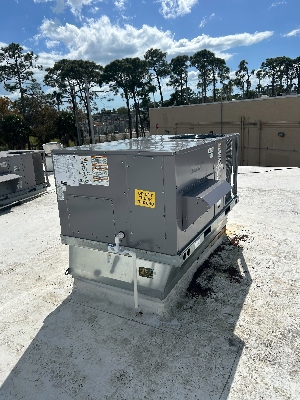
RTUs sit directly exposed to sun, rain, and salt air, which makes them the hardest-working and often hardest-hit equipment on a commercial property. Leak checks, coil care, blower health, and economizer verification are the core service points on any RTU, and skipping even one for a season tends to show up as a comfort complaint or a spike in energy use before it shows up as a full failure.
Economizers deserve particular attention because they're easy to overlook and expensive to ignore. A properly functioning economizer pulls in outdoor air to help meet cooling needs instead of running mechanical refrigeration constantly, which matters because heating and cooling together account for roughly 35 percent of all energy consumed in U.S. buildings, according to the U.S. Department of Energy.
When an economizer sticks or fails silently, the system compensates by running mechanical cooling nonstop, and the only sign is a utility bill that keeps climbing for no apparent reason.
A rooftop unit that's serviced on a real cadence, rather than only when something already feels wrong, tends to hold its efficiency and its expected lifespan far better than one running on a reactive schedule. Uneven comfort across a building is often the first visible sign of a problem, and HVAC airflow balancing can resolve it before anyone assumes a full unit replacement is the only fix.
It's tempting to assume heat pump systems barely matter in a market where cooling dominates most of the year, but that's exactly why they fail when they're finally needed. Defrost logic, reversing valves, and staging controls that sit mostly idle for months can seize up or malfunction right when a cold front finally rolls through and a building actually needs heat.
A heat check before a cold front is the kind of low-cost, high-value visit that catches these issues while there's still time to fix them without an emergency call.
Reliable heat pump repair specialists will check these components during a scheduled visit rather than waiting for the one week a year they're called on.
VRF and VRV systems distribute comfort across many zones using shared refrigerant lines and controls, which means a single firmware or balancing issue can create comfort complaints in parts of a building that seem unrelated to each other. Diagnosing these systems requires checking controls, balancing, and firmware together, not troubleshooting one zone in isolation, and often benefits from the same HVAC zoning system upgrades that solve uneven comfort in large residential properties.
Buildings running VRF systems tend to have more zones and more tenants affected by a single issue, which makes a documented maintenance history even more valuable when something eventually needs attention.
A maintenance contract is only as good as the company standing behind it, and the questions you ask before signing tell you almost everything you need to know.
Many of the same questions to ask an HVAC company that protect a homeowner from a bad service experience apply just as directly to a commercial contract, and a handful of direct questions can save a business owner from a bad one long before the first invoice arrives.
Start with scope and access. Ask exactly what's included in a typical visit, whether the provider can work before opening or after closing, and how they handle badge access and safety requirements on your site. A provider who can't answer clearly hasn't done this kind of work often enough to be trusted with it.
That last question matters more than it might seem. A provider confident in the value of their own service should have no problem letting you test the relationship with a single inspection or maintenance visit before locking into a broader agreement. Hesitation on that point is worth noticing.
Commercial HVAC work, especially anything involving a full system swap or new ductwork, usually requires permits and inspections that a homeowner project might skip. Permits matter for AC installation because skipping them protects you from code violations that can complicate a sale, a lease renewal, or an insurance claim down the line.
A provider who pulls permits as a matter of course, rather than only when asked, is signaling that they plan to still be standing behind the work years from now.
If your building is approaching the point where repair no longer makes financial sense, a full HVAC system installation is worth budgeting for well before the current equipment actually fails. A rushed commercial installation, especially one done without proper load calculations, tends to create the exact comfort and efficiency problems a new system was supposed to solve.
Ask for a clear installation timeline, a plan for minimizing disruption to your operating hours, and documentation of the permits and inspections involved.
Getting straight answers to these questions upfront is worth far more than any glossy brochure or sales pitch, and it sets the tone for how the relationship will actually work once the contract is signed.
Filters are easy to overlook on a commercial property with several rooftop units feeding different zones, and a missed change cycle affects airflow and energy use across the whole building.
Every unit has its own sign it's time to replace the HVAC filter, and confirming your provider tracks that cadence per unit rather than guessing keeps airflow balanced across every zone your building depends on.
A provider who documents filter changes alongside coil and drain checks is treating your building as a system, not a collection of unrelated units that each get attention only when they complain loudly enough. The businesses that avoid downtime aren't the ones with the newest equipment.
They're the ones with a maintenance relationship built on documentation, clear communication, and a provider who treats a commercial site with the same respect they'd want for their own operation.
Commercial HVAC failures rarely happen without warning. A worn belt, a corroding coil, or a sticking economizer usually gives weeks or months of small signals before it becomes an emergency call in the middle of a Sarasota heat wave. The businesses that avoid downtime are the ones paying attention to those signals through a real maintenance relationship, not the ones hoping the system holds until next year.
Choosing the right partner means asking pointed questions about documentation, response windows, and how a provider actually handles your building's specific mix of rooftop units, splits, or VRF zones. It also means finding a company that respects your operating hours and your customers as much as they respect the equipment on your roof.
Gary Air has spent years working on commercial properties across Sarasota and Manatee County, from offices and retail strips to restaurants and medical buildings, and understands what it takes to keep a business running without disruption. If your commercial HVAC system is due for a real maintenance plan, or if you're not sure your current contract is actually protecting you, reach out to Gary Air to schedule a walkthrough and get a tailored plan built around your building and your hours.