Ensure your HVAC system delivers balanced airflow with Gary Air. Expert residential and commercial HVAC airflow balancing for comfort, efficiency, and energy savings.
Does your home have rooms that feel too hot while others stay too cold? This common problem often points to an issue with your HVAC system's airflow balance. HVAC airflow balancing is a professional service that measures and adjusts how air moves through your heating and cooling system to make sure every room gets the right amount of conditioned air.
When your system is properly balanced, you'll notice more even temperatures throughout your home, lower energy bills, and better overall comfort. Most homeowners don't realize their HVAC system needs this service until they start experiencing hot and cold spots or notice their energy costs going up.
Professional airflow balancing typically costs between $300 and $1,200 depending on your home's size and how complex your ductwork is. The good news is that this service can help you understand why certain rooms feel uncomfortable and give you a clear path to fixing the problem for good.
In this article, you’ll learn how HVAC airflow balancing service measures and adjusts delivered airflow so each room receives the correct CFM for consistent temperatures and efficient operation.
Here’s what you need to know:
Let's dive in!
HVAC airflow balancing is the process of measuring and adjusting the distribution of air through your heating and cooling system to make sure every room gets the right amount of conditioned air. This process helps eliminate temperature differences, reduces wasted energy, and keeps your system running efficiently.
Air balancing targets the flow of heated or cooled air moving through your ducts and vents. When you balance your system, a technician measures how much air each room receives and adjusts dampers or registers to fix any problems. This creates consistent airflow to all areas of your home or building.
Without proper balancing, some rooms might get too much air while others barely get any. The system works by adjusting mechanical components within the ductwork to control where air goes. Your HVAC system performance depends on this even distribution to work as designed.
A balanced system means you won't need to constantly adjust your thermostat or close vents in certain rooms. Each space gets exactly what it needs based on its size and cooling or heating requirements.
Hot and cold spots happen when airflow isn't distributed evenly throughout your space. You might notice one bedroom stays freezing while another feels like a sauna, even though your thermostat is set to the same temperature. These temperature differences mean your HVAC system isn't delivering air where it should.
Air balancing fixes this problem by making sure each room receives the proper amount of conditioned air. The process identifies which areas are getting too much or too little airflow and makes adjustments to correct it. Once balanced, every room should stay close to your desired temperature.
These temperature inconsistencies often point to blocked ducts, closed dampers, or poor initial system design. Balancing addresses these issues without requiring major renovations or equipment replacement in most cases.
An unbalanced HVAC system wastes energy by running longer than necessary to heat or cool problem areas. Your equipment works harder to compensate for rooms that aren't getting enough air, which drives up your utility bills. Studies show proper balancing can reduce energy costs by up to 25 percent.
When air distribution is optimized, your system reaches the desired temperature faster and cycles less frequently. This means your furnace, air conditioner, or heat pump doesn't run as long during each heating or cooling cycle. The reduced runtime translates directly to lower monthly energy expenses.
Balanced airflow also extends the life of your equipment by reducing wear and tear. Your system components last longer when they're not constantly overworking to maintain comfort levels throughout your space.
Proper airflow helps your HVAC system filter and circulate air more effectively throughout your home. When air moves correctly through return vents and supply registers, it passes through your filters as intended. This removes dust, allergens, and other particles from the air you breathe.
Americans spend about 90% of their time indoors, where concentrations of some pollutants are often 2 to 5 times higher than typical outdoor levels, so balanced supply/return airflow that supports filtration and ventilation is a practical indoor comfort solution, according to the U.S. EPA.
Stagnant air in poorly balanced systems allows contaminants to build up in certain rooms. Areas with weak airflow don't benefit from the same level of filtration as rooms with strong circulation. Balancing ensures all spaces receive fresh, filtered air at the appropriate rate.
Good air circulation also helps control humidity levels more consistently. This prevents moisture problems that can lead to mold growth or musty odors in areas with limited airflow.
Florida’s average relative humidity is about 74.5%, so airflow optimization HVAC work along the Gulf Coast should be verified for both delivered CFM and moisture control (to avoid clammy rooms and comfort complaints), according to UF/IFAS Extension.
HVAC system performance improves across the board when airflow is properly balanced. Your equipment operates within its designed parameters, which means it heats and cools at optimal efficiency levels. The system doesn't strain to overcome distribution problems or fight against closed dampers and blocked vents.
Balanced airflow reduces pressure imbalances in your ductwork that can cause whistling noises, rattling, or other sounds. Your system runs more quietly and smoothly when air moves through ducts without restriction or excessive pressure. This creates a more comfortable living environment beyond just temperature control.
Regular balancing helps you catch potential problems before they become expensive repairs. Technicians often identify issues like leaking ducts, failing dampers, or undersized returns during the balancing process. Addressing these problems early protects your investment in your heating and cooling system.
Your HVAC system gives clear signals when airflow is out of balance. Recognizing these warning signs helps you address problems before they lead to higher costs or equipment damage.
Some rooms feel too hot while others stay cold. This temperature difference of more than 3-5 degrees between rooms means your system isn't distributing air properly.
The problem often starts in rooms farthest from your HVAC unit. These spaces receive less conditioned air than rooms closer to the system. Upper floors typically run warmer than lower levels because hot air rises and your ductwork may not compensate for this natural tendency.
You might notice your bedroom stays warm at night while your living room feels chilly. Or your home office remains cold even when the rest of the house feels comfortable. These inconsistencies waste energy because you end up adjusting the thermostat to fix one room, which then overcools or overheats other areas.
Certain rooms feel stuffy with stale air that doesn't move. Other spaces have weak airflow from vents or feel drafty. Place your hand near vents in different rooms to test airflow strength.
A balanced system delivers consistent airflow to each room based on its size and needs. When you notice weak airflow in some vents and strong bursts from others, your system needs adjustment. Stuffy rooms indicate blocked or restricted airflow that prevents fresh conditioned air from entering the space.
Your energy bills climb higher without changes to your usage patterns. An unbalanced system works harder and runs longer to reach the temperature you set on your thermostat. This constant operation increases your monthly costs by up to 25 percent.
The extra runtime happens because your system tries to satisfy the thermostat reading. If the thermostat sits in a room with good airflow while other rooms stay uncomfortable, your system keeps running to compensate. You pay more each month while some rooms still don't reach the right temperature.
You hear whistling, rattling, or rushing sounds from your vents. These noises signal that air is forcing through restricted spaces or hitting obstacles in your ductwork. Normal airflow produces minimal sound.
Loud vents often mean dampers are closed too much or ducts have blockages. The air pressure builds up and creates noise as it squeezes through smaller openings. You might also notice dust blowing out of vents more than usual, which indicates excessive air pressure pushing particles through the system.
Your system turns on and off repeatedly in short cycles. This happens when unbalanced airflow prevents proper temperature regulation. Short cycling puts stress on your equipment and reduces its lifespan.
The system shuts off because the thermostat thinks the home has reached the set temperature. But since air doesn't distribute evenly, the system quickly turns back on when the thermostat area changes temperature again. This constant starting and stopping uses more energy than steady operation and wears out mechanical parts faster.
Equipment that short cycles may fail years earlier than properly balanced systems. You'll face more repair calls and earlier replacement costs.
Professional technicians use specialized tools and methods to measure, adjust, and verify airflow throughout your system. This process involves testing equipment, adjusting mechanical components, and confirming that air distributes evenly across all rooms.
Your technician starts by examining your entire HVAC system to identify existing problems. They check the condition of your ductwork, looking for leaks, disconnections, or damage that could affect airflow. They also inspect dampers, filters, and registers to ensure nothing blocks air movement.
Leaky ducts that spill conditioned air into unconditioned spaces can add hundreds of dollars per year to heating and cooling costs, which is why pros check duct integrity during airflow optimization HVAC assessments, per the U.S. Department of Energy (DOE).
The technician reviews your system's design specifications to understand the intended airflow rates for each room. They measure the square footage of different areas and calculate the required cubic feet per minute (CFM) for proper heating and cooling. This baseline data helps them determine how far your current system performance deviates from ideal conditions.
During the assessment, they note hot and cold spots throughout your home. They also check for pressure imbalances that can strain your equipment. This initial inspection gives the technician a complete picture of what adjustments your system needs.
Technicians use specialized instruments to measure the exact amount of air flowing through each register and vent. An anemometer captures airflow velocity, which converts to CFM measurements. They test every supply register that pushes air into rooms and every return vent that pulls air back to the system.
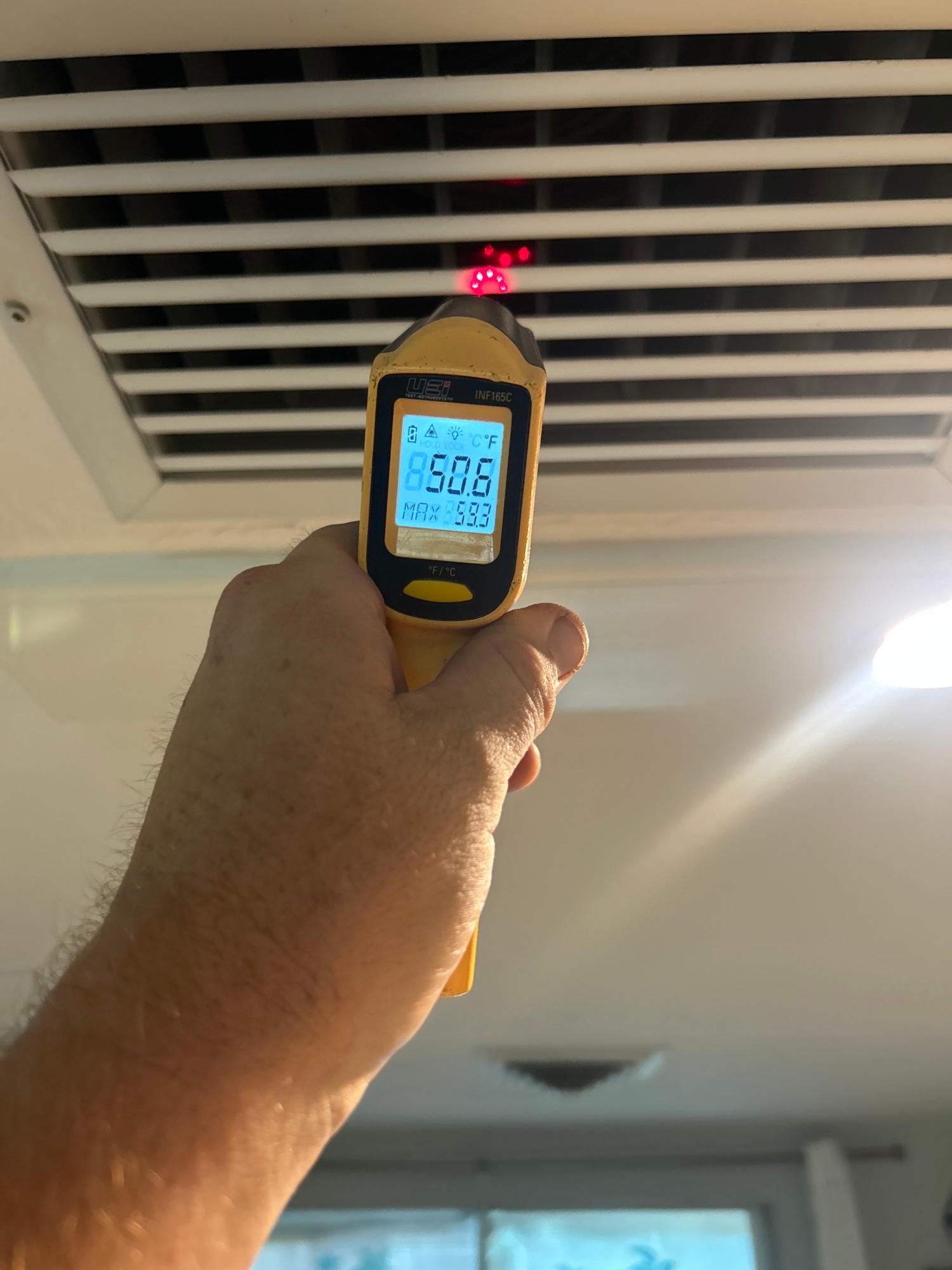
The technician records CFM readings at each location and compares them to design specifications. Rooms that receive too much or too little air become immediately apparent through these measurements. They also measure the temperature of air coming from each vent to ensure consistent heating or cooling.
These precise measurements provide concrete data about your system's current performance. The readings help identify which areas need adjustment and by how much.
Your technician adjusts dampers located throughout your ductwork to control airflow distribution. These dampers work like valves that open or close to increase or decrease air reaching specific areas. They use sequential balancing, which involves starting at the registers farthest from your air handler and working backward.
The technician makes small adjustments to each damper and then remeasures airflow. They repeat this process until all registers deliver the correct CFM. Some systems need damper adjustments at multiple points along the duct runs to achieve proper balance.
If your ductwork has leaks or gaps, they may seal these areas to prevent air loss. Proper sealing ensures the air reaches its intended destination rather than escaping into attic or crawl spaces.
In many homes, about 20% to 30% of the air moving through the duct system is lost due to leaks, holes, and poor connections, so sealing duct leakage is often necessary to achieve stable room-by-room airflow targets during residential HVAC balancing, according to ENERGY STAR (U.S. EPA).
The blower fan speed directly affects how much air moves through your system. Your technician adjusts fan speed settings to match your home's airflow requirements. Most modern HVAC systems have multiple fan speed options that can be programmed for heating and cooling modes.
They verify that your fan delivers enough total CFM for your home's size without overworking the equipment. Too much fan speed can create noise and inefficiency, while too little fails to distribute air properly. The technician balances these factors to optimize performance.
They also check and adjust your thermostat settings and zone controls if your system has them. These settings work together with physical adjustments to maintain comfortable temperatures.
After completing all adjustments, your technician measures airflow at every register again. This verification confirms that all areas now receive the correct CFM according to design specifications. They check that temperature differences between rooms fall within acceptable ranges.
The technician monitors your system during a complete heating or cooling cycle. They verify that temperatures stabilize quickly and remain consistent. They also listen for unusual noises that might indicate airflow problems.
You receive documentation showing before and after measurements at each register. This report proves your system now operates at peak efficiency with balanced airflow optimization throughout your home.
A properly balanced HVAC system delivers consistent comfort throughout your home while reducing energy waste and equipment strain. These services address common issues like uneven temperatures and high utility bills by optimizing how air flows through your ductwork.
HVAC airflow balancing eliminates hot and cold spots that make certain rooms uncomfortable. When your system is balanced, each room receives the right amount of heated or cooled air based on its size and location. You won't need to adjust your thermostat constantly or avoid certain areas of your home.
Balanced airflow means your bedroom stays cool in summer without making your living room feel like a freezer. Your HVAC system distributes conditioned air evenly across all spaces. This creates a stable temperature throughout your home that matches what you set on your thermostat.
Professional technicians measure airflow at each vent and adjust dampers in your ductwork to fix imbalances. They account for factors like room size, sun exposure, and duct length to determine proper airflow levels.
Balanced airflow helps your HVAC system use less energy to maintain comfortable temperatures. When air distributes properly, your heating and cooling equipment doesn't need to run as long or work as hard. This translates directly into lower monthly utility bills.
An unbalanced system wastes energy by overcooling some rooms while undercooling others. Your thermostat might be in a room that gets too much airflow, causing it to shut off before other rooms reach the desired temperature. Balancing fixes this inefficiency.
You can reduce your energy costs by up to 25 percent with proper air balancing. An energy-efficient HVAC system that's been balanced operates at peak performance levels. The system reaches your target temperature faster and maintains it with fewer cycles.
Proper airflow balancing helps your HVAC equipment last longer by reducing unnecessary strain. When your system is unbalanced, certain components work harder than they should to compensate for poor air distribution. This extra work shortens the equipment's useful life.
A balanced system runs more efficiently with less stress on critical parts like the blower motor and compressor. These expensive components don't overheat or cycle on and off excessively. Your furnace, air conditioner, or heat pump maintains steady operation without fighting against restricted airflow.
Regular balancing catches developing problems before they cause major damage. Technicians identify blocked ducts, dirty filters, or failing dampers during the balancing process. Addressing these issues early prevents costly repairs and premature system replacement.
Airflow imbalances force your HVAC components to work harder than necessary. Your blower motor runs longer cycles trying to push air through restricted areas. The compressor strains to cool air that isn't circulating properly.
Balanced systems experience less mechanical stress because air moves freely through properly adjusted ductwork. Parts like bearings, belts, and motors operate within their designed specifications. This reduces breakdowns and extends the time between maintenance visits.
Your system also experiences fewer temperature fluctuations in the ductwork when airflow is balanced. Extreme temperature swings can damage duct seals and connections over time. Consistent airflow protects these components from premature deterioration.
Proper airflow balancing improves how your HVAC system circulates and filters air throughout your home. When air moves correctly, your filters capture more dust, pollen, and other particles. Stagnant air in poorly balanced systems allows contaminants to settle in living spaces.
Balanced airflow prevents moisture buildup that leads to mold and mildew growth. Air circulates through all areas of your home instead of becoming trapped in certain rooms or sections of ductwork. This consistent movement keeps humidity levels in check.
To reduce mold risk in humid Florida conditions, keeping indoor humidity below 60% is a practical target that supports residential HVAC balancing strategies that improve air movement and dehumidification effectiveness, per the Florida Department of Health.
Your indoor comfort solutions work better when air balancing supports proper ventilation. Fresh air mixes more effectively with conditioned air. You breathe cleaner air because pollutants don't accumulate in areas with weak airflow.
Regular upkeep keeps your HVAC system running smoothly and prevents airflow problems from developing. Simple tasks like changing filters and keeping vents clear help maintain the balance that professionals establish during service visits.
Blocked vents force your HVAC system to work harder and create uneven temperatures throughout your home. Furniture, curtains, rugs, and other objects can restrict airflow when placed too close to supply and return vents.
Check all vents in your home monthly to make sure nothing blocks them. Move any furniture or decorations that sit within 12 inches of floor vents or wall registers. Keep drapes and blinds at least 6 inches away from vents to allow proper air circulation.
Dust and debris buildup on vent covers also reduces airflow. Vacuum your registers every two weeks and wipe them down with a damp cloth monthly. Remove the vent covers quarterly for a deeper cleaning to eliminate accumulated dust that normal vacuuming misses.
Dirty filters are one of the most common causes of airflow problems in HVAC systems. A clogged filter restricts air movement and forces your system to strain, which leads to hot and cold spots in different rooms.
Replace standard 1-inch filters every 30 days if you have pets or allergies. Homes without pets can extend this to 60-90 days. Thicker filters (4-5 inches) last 6-12 months depending on your system usage and air quality.
Check your filter every month even if you don't plan to replace it yet. Hold it up to a light source—if you can't see light passing through, it needs replacing immediately. Set a phone reminder on the first day of each month to build this habit.
Professional maintenance catches small issues before they turn into major airflow problems. Technicians clean components, check refrigerant levels, and verify that all parts work correctly.
Schedule professional service twice yearly—once before cooling season and once before heating season. Spring and fall appointments prepare your system for peak usage periods. These visits typically cost $80-150 but prevent expensive repairs and keep your system balanced.
During maintenance visits, technicians inspect ductwork connections, test airflow at registers, and adjust dampers if needed. They also clean evaporator coils and blower components that you cannot safely access yourself. This professional attention maintains the airflow balance established during previous balancing services.
Tracking your system's behavior helps you spot balance issues early. Pay attention to temperature differences between rooms and unusual sounds from your HVAC equipment.
Use a basic thermometer to check temperatures in different rooms when your system runs. Write down readings from each room monthly. A difference of more than 3-4 degrees between spaces suggests developing balance problems that need attention.
Listen for changes in how your system operates. Whistling sounds from vents, longer run times, or weak airflow from certain registers signal potential issues. Note when you first notice these changes and contact a technician if they persist for more than a few days.
Leaky ducts waste conditioned air and disrupt the balance throughout your home. Air escaping through duct gaps never reaches its intended destination, creating temperature inconsistencies.
Inspect exposed ductwork in your basement, attic, or crawl space every six months. Look for gaps at joints, tears in flexible ducts, or sections that have separated. Feel along duct seams while your system runs to detect air escaping.
Seal small gaps yourself using mastic sealant or metal-backed tape designed for HVAC systems. Never use standard duct tape, which deteriorates quickly. For larger leaks, damaged sections, or ducts in hard-to-reach areas, hire a professional to ensure proper repairs that maintain system balance.
Gary Air brings technical expertise and proven methods to every airflow balancing project. The company serves both homes and businesses with reliable service that addresses comfort issues and cuts energy waste.
Gary Air employs fully licensed technicians who understand the complexities of airflow distribution in residential and commercial systems. Each technician receives ongoing training in air balancing techniques and HVAC system diagnostics.
The team knows how to identify problems like inconsistent temperatures between rooms and weak airflow from vents. They understand that unbalanced systems force your equipment to run longer cycles, which increases wear on components and raises utility bills.
Experience matters when adjusting dampers and measuring air pressure throughout your ductwork. Gary Air's technicians have worked on various system types and building layouts, so they can handle straightforward residential HVAC balancing jobs and complex commercial installations.
Gary Air uses professional-grade instruments to measure airflow at each register and return vent in your space. These tools include digital manometers for pressure readings and anemometers that measure air velocity.
The company's diagnostic approach starts with a complete system assessment. Technicians document current airflow levels and identify areas receiving too much or too little conditioned air. They check your ductwork for leaks and verify that dampers operate correctly.
This equipment allows precise adjustments instead of guesswork. The team can measure results immediately after making changes to confirm that each room receives the correct amount of heated or cooled air.
Gary Air handles airflow balancing for homes of all sizes and commercial properties. The company schedules appointments that fit your availability and arrives prepared to complete the work efficiently.
For residential HVAC balancing, technicians work room by room to eliminate hot and cold spots. They adjust dampers, modify vent flow, and make sure your system distributes air evenly throughout your living spaces.
Commercial projects require coordination to minimize disruption to your business operations. Gary Air's team can work during off-hours when needed and completes larger balancing projects in phases if required.
Gary Air's balancing service addresses the root causes of uneven heating and cooling in your building. Proper airflow distribution means your thermostat accurately reflects conditions throughout your space, not just in one area.
Balanced systems operate more efficiently because they don't need extended run times to reach target temperatures. You can expect lower energy bills after balancing, with some systems seeing reductions of up to 25 percent in operating costs.
The service also extends equipment life by reducing strain on your furnace, heat pump, or air conditioner. When air moves through your system as designed, components experience less wear and require fewer repairs over time.
HVAC airflow balancing makes your home more comfortable and saves you money. When you balance your system properly, every room gets the right amount of heating or cooling. This means no more hot spots in summer or cold rooms in winter.
Professional balancing services cost between $300 and $1,200 depending on your home's size. This investment pays off through lower energy bills and a longer-lasting HVAC system. You can reduce your energy costs by up to 25 percent with proper balancing.
You can handle some basic balancing tasks yourself, like adjusting manual dampers and checking vent registers. However, professional technicians have specialized tools to measure airflow precisely. They can spot problems you might miss and make adjustments that truly optimize your system.
Watch for signs that you need balancing. These include uneven room temperatures, weak airflow from vents, rising energy costs, and equipment that runs longer than normal. Addressing these issues early prevents bigger problems later.
Your HVAC system works best when air flows correctly through every part of your ductwork. Balancing ensures your system delivers comfort efficiently while protecting your investment in heating and cooling equipment.
Schedule HVAC airflow balancing service with Gary Air to measure register CFM, adjust dampers and fan settings, and verify room-by-room temperatures for documented comfort and efficiency gains.