


When your air conditioning fails during a Florida summer, choosing the right HVAC company can feel urgent and overwhelming. Many Sarasota homeowners make costly mistakes by hiring the first contractor who answers the phone, without asking the critical questions that separate trustworthy professionals from companies focused on unnecessary sales.
Asking the right questions before hiring an HVAC company in Sarasota helps you identify whether they prioritize repairs over replacements and transparent pricing over hidden fees. Not all HVAC contractors operate the same way, and some send salespeople instead of trained technicians to diagnose your system.
The questions you ask should reveal how a company prices their work, whether they're licensed and insured, and if they truly put homeowners first when making repair versus replacement recommendations.
In this article, you’ll learn the most important questions to ask HVAC company Sarasota so you can identify repair-first technicians, avoid high-pressure sales tactics, and protect yourself from common pricing traps.
Here’s what you need to know:
Keep reading! Understanding what to ask protects you from surprise costs and ensures you receive honest service.
Some HVAC companies dispatch technicians whose primary role is to sell replacements rather than diagnose and repair your existing system. This practice stems from business models that prioritize equipment sales over service revenue, which can lead to multiple visits, delayed repairs, and higher costs for homeowners.
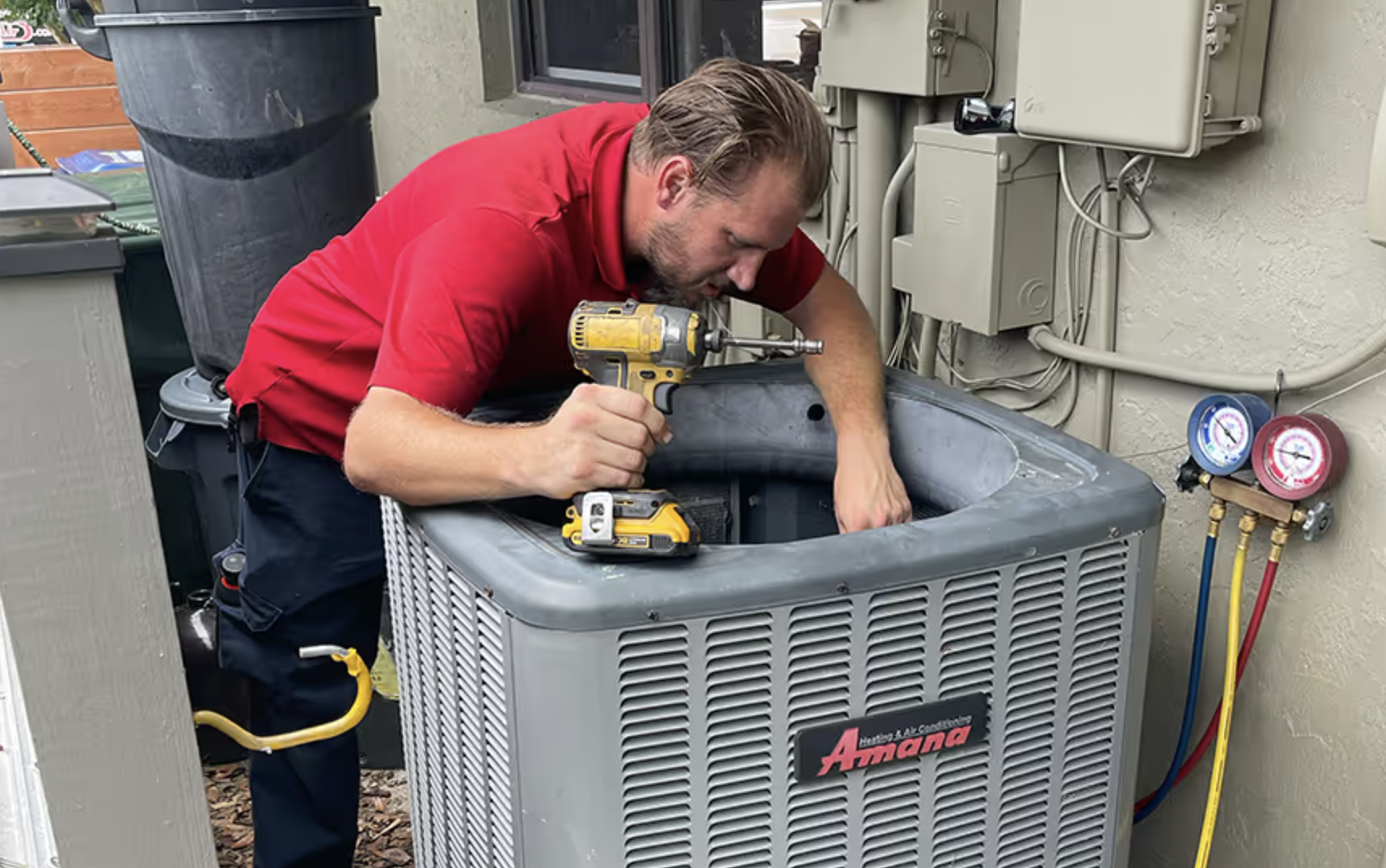
A repair technician focuses on diagnosing problems and fixing your existing equipment. They carry tools, replacement parts, and technical knowledge to restore your system to working condition during the first visit.
A sales technician, sometimes called a "comfort consultant" or "comfort technician," concentrates on presenting replacement system options. While some selling techs have technical backgrounds, their primary training focuses on closing sales rather than performing repairs. They may conduct basic assessments but typically lack the authorization or tools to complete significant repairs on-site.
The distinction matters because these two roles require different skill sets and serve different business objectives. Repair techs maximize the lifespan of your current equipment. Sales techs aim to replace it.
When a company sends a sales tech first, you often need a second appointment if you choose repair over replacement. The sales technician evaluates your system and presents replacement options, but cannot authorize or perform the repair work you might prefer.
This means scheduling another visit with an actual repair technician, waiting for parts to arrive, and taking additional time off work. Your system remains broken while you wait for the follow-up appointment.
Some companies structure this approach intentionally to create a gap between the initial assessment and repair completion. During this waiting period, homeowners may reconsider the replacement option due to discomfort or inconvenience. A traditional service call with a qualified repair tech would diagnose the issue and often complete repairs during that same visit.
Discovering your HVAC has failed during extreme weather creates urgency. You need immediate relief, not a sales presentation for a system that takes days or weeks to install.
Sales techs extending the timeline from diagnosis to resolution adds stress to already uncomfortable situations. When temperatures inside your Sarasota home reach 85 degrees with high humidity, you want cooling restored within hours, not a proposal for equipment delivery scheduled two weeks out.
Many homeowners report feeling misled when they schedule emergency service expecting repairs but receive sales pitches instead. This approach prioritizes the company's replacement revenue over your immediate comfort needs. The practice becomes particularly problematic for elderly residents, families with young children, or anyone with health conditions affected by temperature extremes.
Sales-focused business models build higher overhead into their pricing structure. Companies running large sales departments, extensive advertising campaigns, and commission-based compensation systems pass these costs to customers through elevated equipment prices and service fees.
You might pay diagnostic fees for the initial sales visit, then separate charges when the repair technician arrives later. Some companies waive the diagnostic fee only if you purchase a full system replacement, creating financial pressure toward the more expensive option.
The markup on replacement systems from sales-driven companies can exceed 40-60% compared to service-focused competitors. A $12,000 replacement quote might cost $7,000-8,000 from a company that emphasizes repairs and charges transparent pricing. Sales techs working on commission may also recommend oversized equipment or unnecessary add-ons that inflate your final bill without improving performance.
A repair-first company prioritizes fixing your existing equipment efficiently rather than pushing unnecessary replacements. The answers to specific questions about inventory, scheduling, technician qualifications, and repair philosophy will quickly reveal whether a Sarasota HVAC company operates with your best interests in mind.
Companies committed to repairs maintain well-stocked service vehicles with frequently needed components. Ask what parts they typically carry for your specific system brand and model. A repair-focused technician should have common capacitors, contactors, thermostats, and refrigerant on hand.
If a company sends technicians with minimal inventory, you'll face multiple trips and extended downtime. This approach often indicates a business model centered on selling new equipment rather than fixing what you already own.
Request specifics about their parts inventory system. Do they track which components fail most often in Sarasota's climate? Companies that analyze local failure patterns stock accordingly, enabling faster repairs in Florida's humidity and heat.
The time allocated per appointment reveals whether a company values thorough diagnostics or quick sales pitches. Reputable repair-first companies typically schedule 60-90 minutes for service calls to properly assess your system.
Companies that book 20-30 minute appointments rarely have time for comprehensive troubleshooting. This rushed approach leads to missed issues or premature replacement recommendations because techs lack adequate time to identify repairable problems.
Ask how they handle situations requiring more time than initially scheduled. Quality companies adjust their schedules to complete proper repairs rather than cutting corners or defaulting to replacement proposals.
Hvac technician experience directly impacts repair success rates. Ask about specific certifications like NATE, EPA licensing, and manufacturer-specific training. Experienced technicians with 5+ years in the field typically possess the diagnostic skills needed to repair complex issues.
Request information about ongoing training programs. Technology and equipment evolve constantly, so companies investing in continuing education demonstrate commitment to repair expertise rather than simple system replacement.
Ask if you'll receive the same technician for follow-up visits. Consistency matters when dealing with challenging repairs, and companies that assign dedicated techs show confidence in their staff's abilities.
This question cuts to the heart of a company's business model. A repair-first company should explain their decision-making criteria clearly. They typically recommend replacement only when repair costs exceed 50% of a new system's price and the equipment is beyond its expected lifespan.
Ask for their policy on presenting options. Ethical companies provide detailed cost comparisons showing both repair and replacement scenarios with honest assessments of each system's remaining lifespan.
Request examples of recent repairs they've completed instead of recommending replacement. Companies proud of their repair work will readily share specific cases where they saved customers money by fixing rather than replacing equipment.
Transparent pricing conversations upfront prevent billing disputes and protect you from common contractor tactics that inflate costs. The questions you ask about fees, options, warranties, and follow-up issues determine whether you'll face unexpected charges later.
Most reputable HVAC companies in Sarasota charge a diagnostic or service call fee ranging from $75 to $150 to assess your system. You need to know whether this fee is waived or credited toward the repair if you choose to proceed with their service.
Some companies offer "free estimates" but build the diagnostic cost into inflated repair prices. Others charge a flat trip fee that doesn't apply to the work, meaning you pay twice.
Ask explicitly: "If I approve the repair today, do you subtract the diagnostic fee from my total?" This prevents you from paying $100 just for someone to look at your system, then paying full price for the repair on top of that.
Get the fee structure in writing before the technician arrives. Companies that refuse to clarify this upfront often use pricing ambiguity to avoid hvac scams accusations while still overcharging customers.
A qualified HVAC technician should present multiple solutions with honest pros and cons for each approach. You deserve to understand the difference between a $300 repair that buys you two more years versus a $6,000 replacement that lasts fifteen years.
Ask the company: "Will your technician give me at least two options with different price points?" Legitimate contractors explain why option A costs less but may require future service, while option B costs more upfront but solves the underlying problem.
Beware of companies that only offer one solution—usually the most expensive one. This high-pressure tactic is a common way to avoid hvac scams complaints while still manipulating homeowners into unnecessary purchases.
Request itemized quotes that break down parts, labor, and any additional fees. Vague "system repair: $2,400" quotes make it impossible to verify you're getting fair pricing.
HVAC systems are interconnected, and fixing one component sometimes exposes problems elsewhere. You need to establish upfront how the company handles discoveries made after initial work begins.
Ask: "If you repair my condenser today and find a refrigerant leak tomorrow, do I pay a second diagnostic fee?" Some companies charge you repeatedly for related issues that should have been caught during the first visit.
Request a clear policy on follow-up diagnostics within a reasonable timeframe. A fair company might say: "If we find related issues within 30 days of your original service, we won't charge another diagnostic fee."
Get authorization requirements in writing. You should approve any work beyond the original quote before the technician proceeds, not discover surprise charges on your final bill.
Warranty terms reveal how confident a company is in their technicians and whether they'll stand behind errors. Standard HVAC labor warranties typically range from 90 days to one year, while parts warranties depend on manufacturer terms.
Ask specifically: "What does your labor warranty cover, and how long does it last?" Some companies only warranty the exact component they replaced, while better contractors cover related systems that fail due to their workmanship.
Request the warranty details in writing before agreeing to service. Verbal promises mean nothing when your AC fails again three months later and the company claims the new problem isn't covered.
Find out the process for warranty claims. You need clear answers about response times, whether you'll pay trip fees for warranty work, and what documentation you need to save.
A homeowner-first approach reveals itself in specific moments: how a company responds when you're uncomfortable, whether technicians explain problems clearly, and if warranties protect you rather than shield the business from accountability. These practices show whether an HVAC company prioritizes long-term relationships over quick profits.
When your AC fails on a sweltering evening, responsive communication becomes critical. A homeowner-focused HVAC company in Sarasota should answer calls or respond to messages within a reasonable timeframe, typically within an hour during business hours and the next morning for after-hours emergencies.
You should receive clear information about availability, expected arrival times, and pricing before anyone dispatches to your home. The company should text or call if delays occur rather than leaving you waiting without updates.
During the service call, the technician should explain what failed, why it happened, and what options you have. Technical jargon should be translated into plain language. If parts need ordering, you deserve a timeline and temporary solutions if possible.
Companies that respect your time provide arrival windows of two hours or less. They confirm appointments the day before and notify you when the technician is en route.
Empathy manifests in actions, not just words. A technician should acknowledge the discomfort you're experiencing rather than treating your broken system as just another work order. This means recognizing when children, elderly family members, or pets need cooling quickly.
Respectful service includes wearing shoe covers, using floor mats, and cleaning up completely after work finishes. Your technician should ask where to access equipment and avoid disrupting your daily routine unnecessarily.
Key empathetic behaviors include:
When a technician sees a system that's been neglected, an empathetic approach focuses on solutions rather than criticism. They should educate you about maintenance without lecturing.
Strong warranties demonstrate confidence in workmanship. When problems occur after service, homeowner-first companies investigate what went wrong rather than immediately pointing to user error or excluded conditions.
You should receive written warranties that specify coverage duration, what's included, and how to file claims. Labor warranties typically last one year minimum, while equipment warranties depend on manufacturer terms.
If a repair fails within the warranty period, the company should return promptly without charging trip fees or diagnostic charges. The conversation should focus on fixing the problem, not debating whether the warranty applies.
Companies that blame homeowners often cite:
A reputable company documents system conditions with photos during service and explains maintenance requirements clearly upfront.
Companies focused on keeping customers for decades make different recommendations than those chasing one-time sales. When your HVAC company expects to service your system for the next 15 years, they won't oversell equipment or push unnecessary upgrades.
This long-term perspective means recommending appropriately sized systems rather than the most expensive option. A 3-ton unit suffices for most Sarasota homes under 2,000 square feet, regardless of profit margins on larger systems.
You'll notice this approach when technicians suggest repairs on systems with remaining lifespan instead of automatic replacement recommendations. A 10-year-old unit with a failed capacitor deserves a $300 repair, not a $7,000 replacement pitch.
Customer retention priorities include:
Companies tracking retention rates understand that satisfied customers refer neighbors and return for future needs. This shifts focus from maximizing today's invoice to building trust over years.
Conclusion
When your AC fails in Sarasota, the quickest way to avoid a bad outcome is to ask a few questions that reveal whether the company is repair-first or sales-first. Confirm who they’re sending (a repair technician vs. a sales-focused “comfort” rep), how long they allocate for diagnostics, and whether their trucks are stocked for common same-day repairs.
Protect yourself on pricing by asking the exact diagnostic/trip fee, whether it applies toward the repair, and insisting on an itemized written estimate before any work begins. You should also ask what happens if the first fix exposes another issue soon after, and get the labor warranty terms in writing.
If you want straightforward service, schedule with Gary Air and use these questions up front to ensure you get a qualified technician, clear options with tradeoffs, and recommendations based on system condition—not sales pressure.
Schedule a diagnostic with Gary Air and ask these questions up front so a qualified repair technician—not a sales-first tech—evaluates your system, provides an itemized written estimate, and documents repair-versus-replace options without pressure.







.avif)

