


Prep your AC before the next storm hits Sarasota or Manatee County. Gary Air's hurricane HVAC checklist covers shutdown, surge protection, and restart.
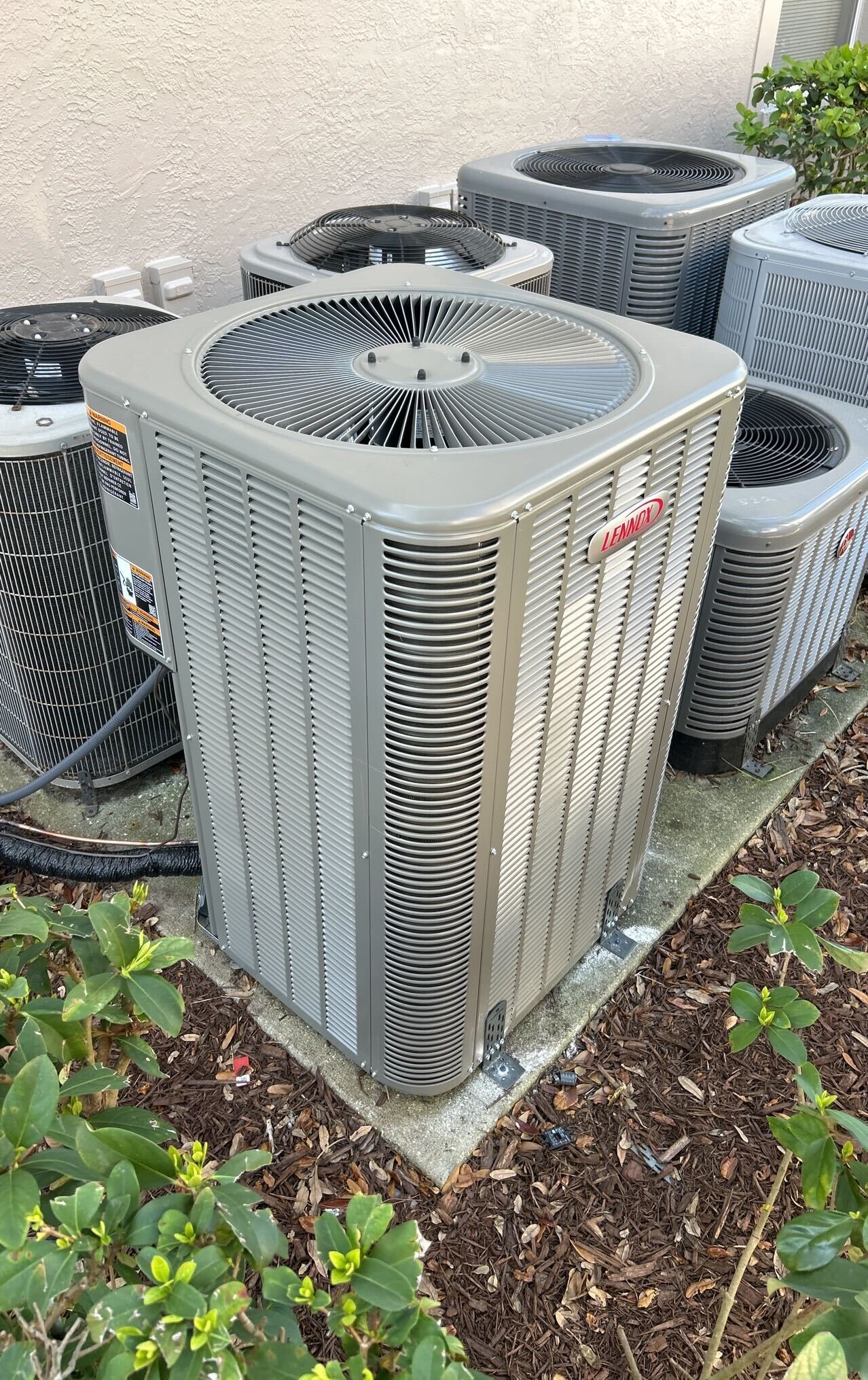
If you have lived on the Gulf Coast for more than one summer, you already know the drill. The sky turns that strange shade of green-gray, the news starts using words like "spaghetti models," and somewhere in the back of your mind you start wondering if your AC unit is actually ready for what is coming. It is a fair question, and most homeowners in Sarasota and Manatee County do not ask it until a storm is already a few days out.
Hurricane season here runs June through November, but the real risk window tightens up in the weeks around late August through October, when storms tend to form fast and track close to home. Your air conditioning system sits outside, exposed to wind, flying debris, and the kind of rain that does not so much fall as arrive sideways. It is also one of the more expensive pieces of equipment attached to your house, which makes it worth protecting before the wind picks up rather than after.
This checklist walks through what actually matters: what to do in the days before landfall, what to leave alone during the storm itself, how to bring your system back online safely, and when storm damage means it is time to stop troubleshooting and call for AC repair cost evaluation instead.
In this article, you will learn about:
Keep reading to make sure your next storm season does not end with an unexpected AC replacement on top of everything else.
Hurricane prep for your HVAC system should start well before a storm has a name attached to it, ideally at the start of the season rather than the week a system enters the Gulf. A unit that is already struggling with a dirty filter or a weak capacitor is far more likely to fail outright once you add wind and water into the mix. Think of pre-season prep as removing the small problems so the big problem, the actual storm, is the only thing you are dealing with.
The Sarasota County Emergency Management office and its Manatee County counterpart both recommend treating early-season prep as a checklist item alongside your general disaster kit, not an afterthought. That mindset applies directly to your AC system since it is one of the more vulnerable pieces of equipment on your property once winds start climbing.
A pre-season tune-up is the single most useful thing you can do before hurricane season ramps up, and it takes care of exactly the components that fail under storm stress. A technician checks capacitor strength, contactor wear, and refrigerant charge, all things that behave fine on a calm day but fail the moment a power surge or a sudden voltage drop hits the system.
This is also a good time to have your drain line cleared if it has not been serviced recently. A clogged drain line combined with the extra rainfall a tropical system brings is a fast path to water backing up into the house, which is the last thing anyone wants on top of storm cleanup.
Homeowners in older systems should pay particular attention here. If your AC is already approaching the end of its expected lifespan, a storm is exactly the kind of stress event that pushes a marginal system over the edge, so getting an honest read on its condition before the season peaks is worth the conversation.
Wind does not need much help to turn ordinary yard items into projectiles. Trim back trees, palm fronds, and shrubs near your outdoor unit so less debris has a direct path to it during high winds, and take that same walk around the rest of your property while you are at it.
Photograph your outdoor unit's condition, model number, and serial information now, before anything happens. If a storm does damage the unit, that documentation makes the insurance claim process considerably less painful, and you will not be trying to read a corroded nameplate after the fact.
A few other tasks round out this stage and take very little time:
While you are at it, check whether your filter is due for a change. A clean filter keeps airflow steady during the higher humidity that follows most tropical systems, and it is a five-minute task that is easy to forget in storm-prep mode.
Once those baseline tasks are handled, it is worth thinking about how your home's construction affects your risk level. According to Manatee County's building safety guidelines, homes built after March 2012 are required to withstand winds up to 150 miles per hour, while homes built before March 2002 were only built to sustain 90 to 110 mile-per-hour winds depending on location. If your home falls into that older category, your outdoor HVAC unit is sitting on a property with less structural wind resistance overall, which makes securing the unit itself even more worthwhile.
Anna Maria Island, Longboat Key, and Siesta Key homeowners face an added layer here. Salt air already accelerates corrosion on outdoor coils and line sets in a normal year, and storm surge or flooding pushes saltwater intrusion into areas the metal was never built to handle. If your property sits directly on the coast, treat pre-season maintenance as slightly more urgent than someone living further inland in Lakewood Ranch or Parrish.
Homes with ductwork running through attics or crawlspaces should also consider a ductwork inspection before the season peaks. Storm-driven rain finds gaps in ductwork that a normal afternoon shower never reaches, and a leak that goes unnoticed for a few weeks after a storm often shows up later as a musty smell or a spike in humidity.
Once a storm is close enough that evacuation orders or shelter-in-place guidance start showing up on the news, your AC system moves from a maintenance item to an active safety decision. The single most important step, and the one homeowners forget under pressure, is shutting off power to the unit before the worst of the wind and rain arrives.
Turning off the outdoor unit at the breaker, not just the thermostat, protects the compressor from the kind of electrical event that a storm reliably produces.
A surge hitting a live system can cook a compressor in a way that a simple breaker flip prevents entirely. This matters because power surges commonly occur when the electrical grid takes a hit during a storm and comes back online unevenly, sometimes multiple times as utility crews work through repairs. If your home has a whole-house surge protector installed at the main panel, that adds another layer of protection, but it is not a substitute for cutting power to the outdoor unit directly.
The timing question homeowners usually ask is how early to do this. The honest answer is before you lose daylight or cell signal to check the forecast, not after winds are already gusting. Once tropical storm-force winds arrive, walking outside to flip a breaker stops being a reasonable idea.
If you rely on a smart WiFi thermostat to control your system remotely, do not count on checking or adjusting it once you have cut power at the breaker. Set your plans before the storm arrives rather than assuming you will have app access partway through.
Beyond the electrical side, a short pre-storm walk-through around your outdoor condenser pays off. Clear loose patio furniture, potted plants, and anything else nearby that wind could turn into debris, since a lawn chair through a coil does more damage than most storms manage on their own.
Confirm the unit itself is not sitting in a low spot where standing water is likely to pool during heavy rain. If you have hurricane straps or a tie-down kit for the unit, this is the point to use them, not after winds have already picked up. A few final checks before you head indoors for good:
Some homeowners ask about covering the outdoor unit entirely with a tarp, and the honest answer is that it usually causes more harm than it prevents. A wrapped unit traps moisture against the coils and electrical components, and a loose tarp becomes its own airborne hazard in high wind.
The unit is built to handle rain, since it sits outside every day of the year regardless of weather. What it is not built to handle is running unprotected through a power surge, which is why the breaker step matters more than any physical covering you could add.
The instinct once power is restored is to flip everything back on and get the house cool again as fast as possible, especially after a few sweaty days without air conditioning. Resist that instinct for about 30 minutes. Utility companies sometimes restore power in waves, and voltage during that restoration period can be unstable enough to damage equipment that starts up too soon.
Before you touch the thermostat, walk outside and actually look at the unit. You are checking for anything that would make it unsafe or pointless to restart right away.
Look for standing water around or inside the outdoor unit's base, visible debris caught in the fan blades or coil fins, and any obvious physical damage to the cabinet, refrigerant lines, or electrical connections. None of these are things you want to discover after the system is already running.
If you spot visible debris trapped in the coil or fins, clear what you safely can from the outside before restoring power, since debris pressed against a coil restricts airflow the moment the fan starts spinning. If airflow still feels weak once the system is running, a duct cleaning may be worth scheduling, especially in homes where storm winds pushed dust and debris into intake vents.
If everything looks clear, restore power at the breaker and give the system a few minutes before adjusting the thermostat. When you do turn it on, pay attention to what it actually does rather than assuming it is fine because it made a noise.
A system that hums but the fan does not spin is often a failed capacitor, which storms are notorious for finishing off even when the part was already weak going in. A unit that trips the breaker again immediately is telling you something is wrong internally, and running it repeatedly at that point risks turning a fixable issue into an expensive one.
Pay attention to sound as well. A noisy blower that was quiet before the storm usually means something shifted inside the unit, whether that is debris, a loose component, or a motor mount that took on more vibration than it was designed for.
Watch for these signs specifically during the first restart attempt:
Humidity control matters just as much as temperature in the days following a storm. Florida's air conditioning systems remove moisture from indoor air as they cool, and according to the University of Florida IFAS Extension, a properly functioning system keeps indoor humidity in check even with the thermostat set around 78 degrees.
After days without power, a home's indoor humidity climbs fast, and that trapped moisture is exactly what leads to organic growth showing up in cabinets, closets, and drain lines if it goes unaddressed. Getting the system running again correctly, rather than rushing it and causing a shutdown, actually gets your house dry and comfortable sooner than trying to force it.
A few simple signs tell you whether your home's humidity is actually back under control once the system has been running for a while:
It is also worth checking your drain line for clogs once the system is running again. Heavy rain and debris from a storm push more into a drain line than a typical week does, and a clog here shows up fast as water pooling near your indoor unit rather than draining outside where it belongs.
Most storms pass through Sarasota and Manatee County without catastrophic HVAC damage, especially with prep work done in advance. But some situations are genuinely not DIY territory, and knowing the difference protects both your system and your safety.
The clearest signal that you need a technician rather than a self-check is anything involving standing water that reached the unit's electrical components, a burning smell on startup, or a breaker that will not stay reset. These are not situations where running the system "to see what happens" is a reasonable test.
Electrical components that have been wet need to be inspected and often replaced before the system runs again safely, since corrosion from moisture exposure can show up weeks after a storm even when the system seems to be working in the meantime. If your system will not turn on at all after you have confirmed power is restored to the house, that is a clear signal to stop testing it yourself.
A few other signs point toward calling a technician rather than waiting it out:
Homes running a heat pump system should treat storm inspection the same way as a straight AC setup, since the outdoor components face identical wind and water exposure regardless of which system is installed.
The stakes here go beyond equipment cost. A CDC review of deaths related to Hurricane Irma in Florida found that heat-related deaths linked to a lack of air conditioning accounted for a meaningful share of storm-related fatalities in the state, including a cluster of deaths among residents at an assisted-living facility that went without power and cooling for several days in hot weather.
That is the real-world reason getting your system back online safely, and quickly when it is safe to do so, matters well beyond simple comfort. It is a genuine safety system for the people living in the home, particularly for elderly residents or anyone managing a health condition that heat makes worse.
If any of the warning signs above sound like your situation, it is worth having a technician look at the system before the next heat wave puts real demand on a unit that may already be compromised. Waiting until the next no-cool emergency during peak summer demand tends to mean a longer wait for service and a system working harder than it should while it is already damaged.
This is also a reasonable point to ask whether repair makes sense at all. If your system is older and has needed repeated repairs already this year, storm damage can be the deciding factor that tips the math toward replacement rather than another patch job heading into next season.
Storm season is simply part of living on the Gulf Coast, and your air conditioning system is going to face it every single year whether you plan for that or not. The difference between a system that survives a hurricane season and one that does not usually comes down to a handful of small decisions made in the days before landfall, not luck.
Cutting power at the breaker before the storm, keeping debris clear of the outdoor unit, and waiting those crucial minutes before restarting after power returns are the kind of steps that take almost no time but prevent the kind of damage that turns into a multi-day wait for a replacement system during the busiest part of the year for every HVAC company in the region.
If your system came through the last storm running rough, or you would rather have a technician confirm everything is solid before the next one forms, Gary Air is a phone call away. The team has been through plenty of Gulf Coast storm seasons with Sarasota and Manatee County homeowners, and getting your home cool and dry again quickly after a storm is exactly the kind of work they show up for.
Dealing with storm damage to your AC system in Sarasota or Manatee County? Contact Gary Air to get your system checked before the next one forms.





.avif)

