When you press the button on your thermostat and nothing happens, it's more than just uncomfortable in Bradenton's heat and humidity. If you have an AC not turning on in Bradenton, FL, the problem could range from a tripped breaker or thermostat issue to a failed capacitor or compressor, and some fixes are simple while others need professional help.
The good news is that not every AC that won't start needs expensive repairs. Some problems have quick solutions you can try yourself before calling a technician. Other times, the issue requires trained hands and special tools to diagnose and fix safely.
This guide will walk you through the common reasons your air conditioner might not be turning on, what you can safely check on your own, what a professional will look for during a service call, and how to avoid the same problem in the future.
Let's break down to the key points you should consider:
Keep reading! You'll know when to troubleshoot and when to pick up the phone for expert help.
Your AC system relies on several connected parts to work properly. When one component fails, the entire system can stop running even if other parts seem fine.
Your thermostat can have the right settings but still prevent your AC from starting. The wiring inside the thermostat might be loose or corroded, which breaks the connection between your thermostat and your AC unit. Dust and debris can also build up inside the thermostat and block the sensors from reading the temperature correctly.
Dead batteries in battery-powered thermostats will stop the system from turning on. Even hardwired thermostats can lose power if the circuit breaker that controls them trips. The thermostat location matters too. If direct sunlight hits your thermostat or it sits near a heat source, it may read the wrong temperature and not signal your AC to start.
Old thermostats can develop internal electrical problems that prevent them from sending signals to your AC system. You might need to test the thermostat by lowering the temperature setting by at least five degrees and listening for a click sound that indicates it's working.
Your AC system produces condensation that drains through a pipe. A float switch sits in the drain pan and monitors the water level. When the drain line clogs with algae, mold, or debris, water backs up into the pan.
The float switch triggers and shuts off your entire AC system when water rises too high. This safety feature prevents water from overflowing and damaging your home. Your AC will not turn back on until you clear the clog and the water level drops.
In Bradenton's humid climate, drain lines clog frequently. You can check the drain pan near your indoor unit for standing water. A wet drain pan usually means the float switch has activated. Pouring a mixture of water and vinegar down the drain line can clear minor clogs.
Capacitors store electrical energy to start your AC's motors. They can fail at any age due to power surges, extreme heat, or manufacturing defects. Florida's hot climate puts extra stress on capacitors because they sit inside the outdoor unit where temperatures get very high.
A failed capacitor will prevent your compressor or fan motor from starting. You might hear a humming sound from your outdoor unit if the capacitor is weak or dead. Some capacitors fail suddenly while others weaken over time.
Power fluctuations from summer storms can damage capacitors quickly. AC breaker tripping in Bradenton, FL homes can indicate capacitor problems because a failing capacitor draws more power. You should not attempt to test or replace capacitors yourself because they hold dangerous electrical charges even when the power is off.
Capacitors can remain hazardous even when the power is off. According to the Occupational Safety and Health Administration (OSHA), stored electric energy that could endanger people must be released—specifically, capacitors should be discharged (and high-capacitance elements short-circuited and grounded) before handling.
Your AC system needs stable electrical power to run. A tripped circuit breaker at your electrical panel will cut power to your entire system. Check both the breaker for your indoor unit and the one for your outdoor unit.
Breakers trip to prevent overheating and fire hazards—don’t “upsize” protection to stop trips. According to the U.S. Consumer Product Safety Commission (CPSC), fuses and circuit breakers with proper current ratings protect branch circuits from potential fire hazards by disconnecting current when it exceeds a safe level.
The disconnect switch near your outdoor unit might be in the off position. Someone could have accidentally turned it off during yard work. Loose or corroded electrical connections at the disconnect box or contactor can prevent power from reaching your system.
Blown fuses in your AC's electrical components will stop the system cold. Low voltage from your home's electrical system can prevent your AC from starting even if the breaker hasn't tripped. Damaged wiring from animals, weather, or age can create dangerous electrical problems. Lightning strikes during Bradenton's frequent thunderstorms can damage electrical components in your AC system without tripping breakers.
Before scheduling a service call, you can perform several basic safety checks that often reveal simple fixes. These steps focus on confirming power issues, testing basic functions, and knowing which components require professional expertise.
Start by checking your thermostat settings to rule out simple configuration problems. Make sure the thermostat is set to "cool" mode rather than "heat" or "off." The temperature setting should be at least 3-5 degrees below the current room temperature to trigger the cooling cycle.
Check if your thermostat display is lit or responsive. A blank screen often means dead batteries or a tripped breaker. Replace batteries if your model uses them, and wait a few minutes to see if the system responds.
Try lowering the temperature setting significantly to see if this triggers any response from your AC system. If you hear clicking sounds or see the display change but nothing happens, the thermostat is likely communicating properly. This means the problem exists elsewhere in the system.
Some digital thermostats have a reset button or require you to remove them from the wall plate briefly to reboot. Consult your thermostat manual for model-specific reset instructions that might restore function.
Turn off power to your AC at the breaker before opening any panels. Once power is restored and the system is called to run, stand near your indoor air handler or furnace. You should hear the blower motor running and feel air movement from your vents.
Place your hand near supply vents throughout your home. Even if the air isn't cold, you should feel airflow if the indoor blower is operating. No airflow typically means the blower isn't running or your air filter is severely blocked.
Check your air filter location and remove it to inspect for dirt buildup. A completely clogged filter can prevent airflow and cause your system to shut down for protection. Replace disposable filters or clean reusable ones according to manufacturer guidelines.
Listen for unusual sounds like grinding, squealing, or rattling from the indoor unit. These noises suggest mechanical problems with the blower motor or fan that require professional attention.
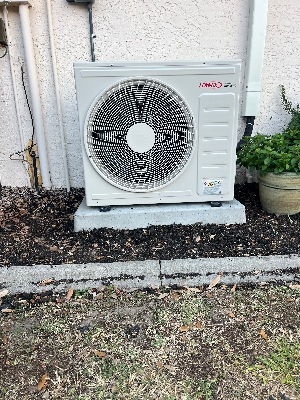
Walk outside to visually inspect your outdoor condenser unit in Bradenton. Look for any obvious damage, debris, or vegetation blocking the unit. Clear away leaves, grass clippings, or objects within two feet of the unit.
Turn off power at the breaker, then check the outdoor disconnect box near your condenser. This box should be in the "on" position and may contain fuses you can visually inspect for damage. Replace blown fuses only if you're comfortable doing so.
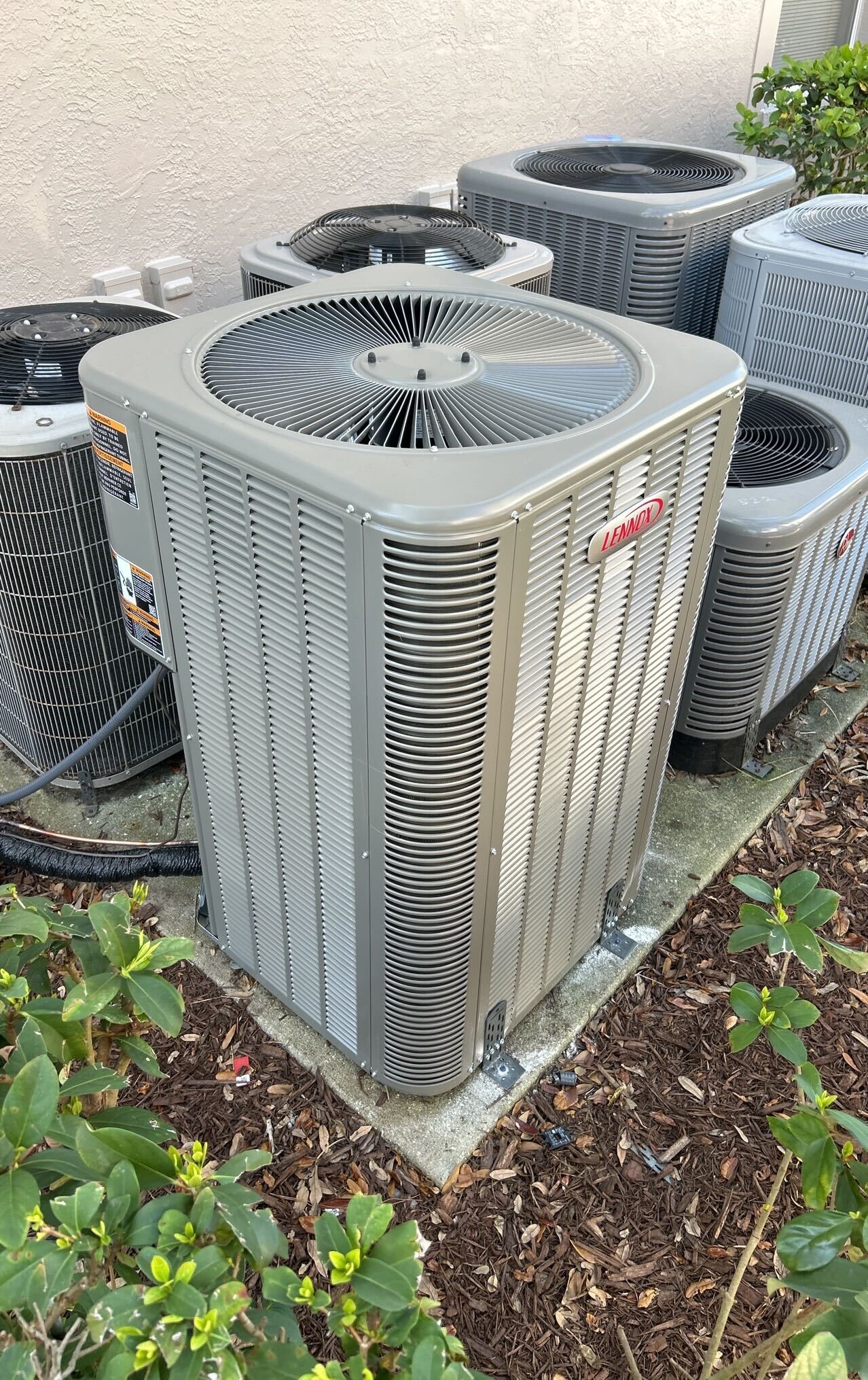
Once power is restored and the thermostat calls for cooling, listen for the outdoor fan motor. You should hear it running and see the fan blades spinning. If your outside AC unit is not running in Bradenton, FL, but you hear humming, this suggests a failed capacitor or motor.
Check the circuit breaker panel inside your home for any tripped breakers serving the AC system. AC units typically have two breakers—one for the indoor unit and one for the outdoor unit. Reset any tripped breakers by switching them fully off, then back on.
A no-start can be as simple as a tripped breaker, but reset timing matters. Per the U.S. Department of Energy (DOE), if the system fails you should check fuses or circuit breakers and let the unit cool for about five minutes before resetting.
Never touch electrical components inside the outdoor or indoor units while power is connected. High-voltage capacitors store deadly electrical charges even after power is shut off. Only qualified technicians should handle these parts.
Avoid touching refrigerant lines or attempting to add refrigerant yourself. Refrigerant systems operate under high pressure and require EPA certification to service legally. Improper handling causes serious injury and environmental harm.
Do not bypass safety switches or disconnect boxes to force your system to run. These switches protect you from electrical hazards and prevent equipment damage. Overriding them creates dangerous conditions.
Stay away from these components:
Always turn off power at the breaker before inspecting your system. If you're unsure about any check or uncomfortable performing it, contact a licensed HVAC technician who can safely diagnose and repair your AC system.
A technician follows a specific order when diagnosing an AC that won't turn on. They start with safety switches and drainage issues common in Florida's humid climate, then move to electrical components like capacitors and contactors, followed by control boards and relays, and finally check refrigerant levels when other causes are ruled out.
Florida's high humidity creates more condensate than in drier climates. Your AC unit produces water as it cools air, and this water must drain properly through a condensate line.
When the drain line clogs with algae or mold, the drain pan fills up. A float switch in the pan will shut down your entire system to prevent water damage to your home. This is one of the first things a technician checks because it's so common in Bradenton's climate.
The technician will inspect the drain pan for standing water and check if the float switch is stuck or triggered. They'll also look at the overflow switch and test if it's working correctly. If either switch is activated, your AC won't start at all, even though nothing is actually broken.
Clearing a clogged drain takes just minutes in most cases. The technician will flush the line and verify the switches reset properly before moving to other components.
The capacitor stores electrical energy to start your AC's motors. When it fails, your outdoor unit won't turn on or will hum without starting.
A technician will first turn off all power to your unit at the disconnect box. They'll discharge the capacitor using an insulated tool because it holds dangerous voltage even when power is off. Using a multimeter, they measure the capacitor's microfarad rating against what's printed on its label.
Signs of a failed capacitor:
For AC capacitor replacement Bradenton, FL homes, technicians often find heat accelerates capacitor failure. The contactor is a relay switch that controls power flow to your compressor and fan. The technician will inspect the contactor points for pitting, burning, or welding shut.
They'll test voltage coming into the contactor and voltage going out when the thermostat calls for cooling. A failed contactor will show power coming in but nothing going out to the compressor.
The control board acts as your AC's brain. A technician won't just replace it hoping to fix the problem.
They start by checking if the board is receiving proper voltage. Using a multimeter, they verify 24 volts at the transformer and proper voltage at each terminal. They'll look for burnt components, loose connections, or corrosion on the board itself.
The technician will test each relay on the board individually. They check if the relay clicks when activated and if voltage passes through when it should. Many boards have LED lights that flash error codes, which the technician will reference against the manufacturer's guide.
They'll also verify the thermostat is sending correct signals to the board. Sometimes the issue isn't the board but a bad wire or faulty thermostat. A good technician will test all inputs and outputs before recommending board replacement.
Control boards are expensive, so proper testing saves you money by avoiding unnecessary replacements.
Low refrigerant usually doesn't prevent your AC from starting. Your outdoor unit will turn on even with low refrigerant, though it won't cool effectively.
However, some modern AC units have low-pressure switches that shut down the system when refrigerant drops too low. This protects the compressor from damage. If your unit has this switch and refrigerant is low, nothing will start.
The technician will check refrigerant only after ruling out electrical issues. They'll connect gauges to your system and compare the pressure readings to manufacturer specifications. If pressure is too low and the safety switch is triggered, they'll need to find and repair the leak before adding refrigerant.
Refrigerant doesn't just disappear over time. If it's low, there's always a leak somewhere in the system.
Regular maintenance catches problems before they shut down your system during Florida's hottest months. Specific tasks like checking capacitors, clearing drain lines, and cleaning coils directly prevent the most common reasons your AC refuses to start.
Capacitors store electrical energy to start your compressor and fan motors. When they weaken, they can't provide enough power to turn on your AC.
A technician tests capacitor strength during routine service. They measure microfarad ratings to see if the capacitor still holds the correct charge. Normal wear causes capacitors to lose 5-10% of their capacity each year in Bradenton's heat.
Warning signs of failing capacitors:
Technicians replace capacitors before they fail completely. This prevents you from coming home to a non-functioning system on a 95-degree day. A weak capacitor detected in spring can be swapped during a scheduled visit instead of during an emergency call.
Your AC produces 5-20 gallons of condensation daily. This water flows through a drain line that exits your home. When the line clogs with algae or debris, water backs up into the drain pan.
Most modern systems have a float switch in the drain pan. This safety device cuts power to your AC when water levels get too high. The system won't turn on until you clear the blockage and reset the switch.
Monthly drain line maintenance stops clogs before they form. Technicians flush lines with a cleaning solution that kills algae growth. They also check that the line slopes correctly for gravity drainage.
You can pour one cup of white vinegar down your drain line each month between professional visits. This simple task keeps biological growth from blocking water flow.
Dirty evaporator and condenser coils force your system to work harder. When coils are covered in dust, pollen, or grime, air can't flow through them efficiently. Your motors strain to pull air through the blocked passages.
This increased resistance raises the electrical load needed to start your system. Over months, the extra strain weakens motors and other starting components. Eventually, the system draws too much power during startup and trips the breaker.
Clean coils maintain proper airflow with minimal resistance. Technicians use special cleaners and low-pressure washing to remove buildup without damaging the thin metal fins. This reduces the starting load by 15-25% compared to dirty coils.
Outdoor units in Bradenton collect more debris from nearby vegetation and coastal air. Professional cleaning twice per year keeps coils functioning at their designed efficiency.
Maintenance customers get priority scheduling when their AC stops working. Most Bradenton HVAC companies bump plan members to the front of the service queue during peak season.
Your service history gives technicians an advantage. They review past maintenance records before arriving at your home. This helps them diagnose problems faster because they know your system's age, previous repairs, and typical performance patterns.
Maintenance plan benefits during emergencies:
Plans also include regular filter changes and system checks. These visits update your service records and give technicians chances to spot developing problems. A technician might notice a relay starting to fail during a spring tune-up, preventing a complete breakdown in July.
When an AC is not turning on in Bradenton, FL, start by treating it like a power-or-control issue until proven otherwise. A tripped breaker, thermostat power loss, a safety shutoff (like a float switch), or a failed start component can all stop the system with no warning—especially during high heat and frequent storms.
If your outside AC unit is not running in Bradenton, FL, technicians typically check for line voltage at the disconnect and contactor, then confirm whether the condenser fan and compressor are being asked to start and can actually start. One of the most common “no-start” culprits is a weak or failed capacitor, but it must be tested safely because capacitors can hold a dangerous charge even with the power off.
Repeated AC breaker tripping in Bradenton, FL is a red flag that should not be ignored or reset repeatedly. It can point to a short, failing capacitor, seized motor, damaged wiring, or compressor issues—problems that require proper electrical testing and, in some cases, immediate shutdown to prevent equipment damage.
Call Gary Air to schedule fast no-start diagnostics in Bradenton—so we can test power safely, confirm the actual failure point, and get your system running again without repeated trips or guesswork.