If you moved to Sarasota from the Midwest or the Northeast, your frame of reference for air conditioning is wrong, and that gap in understanding is costing homeowners in this market real money every summer. A system that runs reliably for two decades in Michigan or Ohio runs far harder here, ages faster, and fails in ways that have nothing to do with the equipment's quality.
The environment does the damage. In this guide, Rob Brooks, owner and veteran technician at Gary Air, shares what he sees on service calls across Sarasota every year: the failure patterns, the maintenance mistakes, and the decisions that separate systems that last from systems that don't.
You'll find a complete guide to AC ownership in Sarasota. It covers why Florida conditions accelerate wear, what goes wrong most often and why, what to do before you call anyone, how often your system actually needs maintenance in this climate, what salt air does to coastal equipment, how to think through repair versus replacement honestly, and what to ask before hiring any HVAC company.
Below, we'll walk through each important aspect.
Keep reading to understand exactly what protects a system investment in this climate, and why the standard HVAC advice you find online does not apply here.
Why Florida is harder on AC systems than almost anywhere else
Florida's climate does not give HVAC equipment a break. The combination of near-constant runtime, extreme ambient humidity, organic growth in drain lines, and coastal salt air corrosion stacks conditions that no general-purpose HVAC guide is designed to address. Understanding these dynamics is the foundation for every smart decision you will make about your system.
Rob Brooks puts the contrast in direct terms: "Up north, an AC might run a few months out of the year. Here it runs a lot of hours, in heat, in humidity, and often near salt air."
In a northern climate, a central air conditioner might accumulate 800 to 1,000 operating hours per year. In Sarasota, the same system can run 14 or more hours per day through the summer months, adding up to more than 2,400 annual operating hours.
That runtime shortens the effective lifespan of every moving part: capacitors, blower motors, fan motors, contactors, and refrigerant lines all experience wear proportional to hours of operation. This is why Florida systems need replacing sooner than homeowners from northern states expect. It is not a product quality problem. It is a usage environment problem, and it changes every calculation about maintenance intervals, repair thresholds, and expected lifespan.
Florida AC systems do not just cool air. They remove enormous quantities of water from it. According to the U.S. Department of Energy, humid conditions require that condensate drains be checked routinely to prevent clogs, since a plugged drain can cause water damage to the home and affect indoor humidity levels.
In Sarasota specifically, a residential air conditioner can extract 7 to 10 gallons of water from indoor air every single day. That moisture flows through the condensate drain system. In the heat and humidity of a Florida home, standing water in drain lines and drain pans creates ideal conditions for organic growth: algae and biological buildup that gradually clogs the drain path.
When a drain line backs up completely, a float switch shuts the system off to prevent overflow from flooding the home. In Sarasota, this is not a once-a-year concern. It is an active, seasonal one that drives the most common emergency calls Gary Air receives every summer.
The component most commonly found failing during peak-season service calls is the capacitor. Capacitors provide the electrical charge that starts and sustains the motors in the compressor, blower, and condenser fan. Heat accelerates capacitor degradation, and Florida summers are relentless.
In moderate climates, a capacitor might last five to seven years. In Sarasota, replacement every two to three years is common, even on newer systems. Rob addresses this proactively: if a capacitor is showing degraded readings during a maintenance visit, he replaces it before peak season rather than waiting for it to fail on a Saturday in July.
Blower and fan motors carry a similar risk when airflow is restricted. A dirty coil forces motors to work against reduced air resistance, which causes them to increase RPM and generate internal heat. That strain shortens motor life, and because motors cost around $1,000 to replace, a neglected coil is one of the more expensive deferred maintenance decisions a homeowner can make here.
The most common things that go wrong, and why they happen here
Sarasota HVAC service calls cluster around a small set of recurring problems. Each one has a specific local cause. Understanding the pattern helps homeowners prevent the most common failures rather than reacting to them after the fact. A full breakdown of common AC problems in Florida specific to this market covers the complete picture, but the patterns below account for the majority of calls Gary Air receives every year.
The single most frequent emergency call Gary Air receives is a system that stopped running because of a backed-up condensate drain line. Organic growth accumulates in the drain line, water backs up, the float switch activates to protect the home from flooding, and the system shuts off.
This failure is almost entirely preventable with consistent maintenance. It is the direct result of high humidity, warm drain pan temperatures, and organic material in the air stream combining in a drain line that has not been flushed recently enough. In Florida, that threshold is reached within four to five months of a cleaning, not twelve.
Between professional visits, homeowners can maintain AC drain line health by flushing accessible lines with a diluted hot vinegar solution to inhibit organic growth. Rob is clear about what not to use: "Residue from harsh drain cleaners can remain in the drain line, get pulled back into the air handler when the blower runs, corrode components like coils, and potentially introduce chemicals into the air stream. If it's a serious clog, it's better to have a pro clean it with the right tools."
Rob is direct about this pattern: "You can have refrigerant moving through coils, but if airflow is restricted, usually from dirty or clogged coils, you're not removing heat the way you should. In humid environments, dirt, dust, and particles get caught more easily."
The evaporator coil inside the air handler and the condenser coil outside both depend on unobstructed airflow to transfer heat correctly. When either is coated with accumulated dust, skin cells, and organic material from the humid air, the system's ability to transfer heat drops significantly. A dirty evaporator coil is one of the most common critical findings when Gary Air is called in after another company performed inadequate maintenance.
The result is a unit that runs constantly, struggles to reach setpoint, and delivers weak temperature splits, sometimes just 7 or 8 degrees Fahrenheit when 18 to 20 is the normal expectation. The inside coil is difficult to access and is the piece most frequently missed during low-quality tune-ups.
Refrigerant does not deplete through normal operation. If a system is low on refrigerant, it has a leak. In Sarasota, the most common sources are corrosion in evaporator coils and line sets, particularly in coastal homes, and contamination from poor original installation practices that introduce moisture into the refrigerant circuit.
Rob describes the diagnostic sequence: "Refrigerant is later in the process. We don't hook up to refrigerant unless we have a good reason, because every connection can lose a little refrigerant and refrigerant is expensive. If refrigerant is low, it's because there's a leak."
Recharging without repairing the source of the leak is a temporary fix. It addresses the symptom while the underlying corrosion or contamination continues to develop. Proper diagnosis involves finding and sealing the source before recharging the system.
Moisture contributes to shorts and malfunctions in control boards, contactors, relays, and low-voltage wiring. These are not always dramatic failures. They often present as intermittent operation, systems that seem to work and then stop, or safety switches that activate without an obvious cause.
The HVAC safety switches most relevant in Florida homes, float switches and high-pressure cutoffs, are often the first indicators that something deeper is wrong. In coastal homes particularly, where humidity exposure is constant and salt accelerates corrosion of electrical contacts, electrical diagnostics should be part of every maintenance visit.
HVAC systems are very sensitive to low-voltage irregularities. When electrical components begin to corrode, voltage does not flow through the wiring correctly, and that affects compressor and motor operation in ways that are difficult to diagnose without a full electrical inspection.
What to do when your AC stops working before you call anyone
Before placing a service call, there are several checks a homeowner can complete safely. They either resolve the issue without a technician entirely, or they provide diagnostic information that helps the company dispatch the right person on the first visit.
Rob's reasoning is practical: "Being able to tell us 'indoor is running but outdoor isn't,' or vice versa, helps us dispatch the right technician and solve it faster."
Work through these steps before calling:
A system that is operating but failing to cool the space adequately presents a different diagnostic picture than one that will not start at all. The most common causes in this market are restricted airflow from dirty coils, a blower motor running below its rated RPM, or a refrigerant issue from a leak.
A weak temperature split is the key indicator. When the difference between supply air and return air measures 7 or 8 degrees instead of the expected 18 to 20, the system is working hard and accomplishing little. That gap points toward airflow or refrigerant as the root cause.
Rob's diagnostic sequence starts with confirming what is and is not running, then moves through drain line status, capacitor condition, and airflow before reaching refrigerant. Connecting gauges to check refrigerant charge is always the last step, not the first, because every connection risks losing a small amount of refrigerant.
Some situations call for turning the system off and calling without delay. A frozen AC unit is not a candidate for a home checklist, and neither is AC leaking water that has already reached flooring or drywall. In those cases, set the thermostat to off and call for service.
Other situations that warrant an immediate call, without running through the checklist first:
The maintenance schedule Florida homes actually need
The standard industry recommendation for HVAC maintenance is once per year. In Florida, that interval is not adequate, and Rob Brooks has a specific reason for it: "Things start clogging back up within four or five months."
That is not a sales pitch. It is a description of what actually happens in high-humidity environments where systems run year-round and pull 7 to 10 gallons of water from the air every day. A drain line cleaned in October can be significantly restricted again by February. A coil cleaned in spring can be compromised well before fall arrives. Most homeowners do not realize how often to service their air conditioner in Florida differs meaningfully from national guidance, and that gap is where preventable failures tend to occur.
There is a significant difference between a maintenance visit and a thorough one. Rob describes what Gary Air covers on a clean and tune:
"We inspect refrigerant levels, thermostat operation and configuration, wiring, contactors, relays, and key electrical components. We inspect and clean coils, evaporator and condenser, check fan components, and test the system in both cooling and heating. We clean drain-related buildup and anything affecting airflow."
The goal is not just cleaning. It is identifying components that are wearing toward failure before they fail. A planned capacitor replacement is a $150 to $200 repair. The same capacitor failing during a heat wave in July is a same-day emergency call with a premium rate and a multi-hour wait.
A complete maintenance checklist covers:
The evaporator coil inside the air handler is difficult to access. It sits inside a tight cabinet with limited clearance, and cleaning condenser coils as well as the evaporator coil correctly takes more time than a quick-turnaround visit allows. Companies that spray the coil with a cleaning solution and leave are not finishing the job.
The dislodged sediment and organic growth that the cleaner loosens will fall off the coil after the technician leaves, block the condensate drain line, and trigger a float switch shutdown within days. Rob is specific about what this looks like: "What it does is it actually falls off the coil after they leave and then it blocks the condensate line and stops the system from running. A clean air conditioner just lasts longer, but it is extra work to get into the corners and get into the drain pans and make sure the cleaning is thorough."
A badly done maintenance visit does not just fail to help. It can directly cause the emergency it was supposed to prevent. This is why asking a company how they clean the inside coil, not just whether they clean it, is a useful vetting question before committing to a maintenance provider.
A one-time clean and tune delivers the service. A membership plan delivers the service plus continuity. Rob explains the difference: "What it does is it allows us to regularly have a Gary technician in the home, which gives us a better understanding of the history of the system. When things go wrong, because they inevitably will, we'll have a better understanding of that system."
Gary Air's AC maintenance plan in Sarasota includes discounted service visits, repair discounts scaled by plan length, and access to emergency dispatch hours on nights and weekends, which are reserved exclusively for members. Every dollar spent on the plan also applies toward a future system replacement.
Salt air, coastal homes, and what it means for your system
The Sarasota market includes some of the most salt-air-exposed residential real estate in the country: Longboat Key, Siesta Key, Anna Maria Island, Lido Key, and properties along the Sarasota Bay waterfront. For homeowners in these locations, the maintenance and lifespan expectations that apply to inland homes do not apply to them.
Rob puts the core principle plainly: "Salt corrodes metal. That's the simple version."
An HVAC system is almost entirely composed of metal components: copper refrigerant lines, aluminum coils, steel cabinet panels, and the low-voltage wiring and electrical connections that run throughout. In a salt-air environment, all of these are under continuous corrosive pressure.
The most visible consequence is coil failure. Salt air causes pinhole leaks to develop in evaporator and condenser coils after just a few years of exposure for homes within close range of the water. Rob described seeing a condenser coil on a unit that was only one year old, installed on the salt-water-facing side of a building directly on the beach, that needed to be replaced entirely due to salt intrusion into the aluminum coil material.
Beyond coils, the electrical system degrades in ways that are less visible but equally damaging. Rob explains what he observes comparing homes of the same age in different locations: "In Siesta Key versus Lakewood Ranch, we would just see corrosion and deterioration of metal components, and definitely in the electrical system. HVAC systems are very sensitive to low voltage. When you have electrical components that are starting to deteriorate, that low voltage doesn't flow through the electrical wiring correctly."
For homes on Sarasota's barrier islands, including Longboat Key and Siesta Key, the realistic average lifespan of a well-maintained system is 8 to 10 years. This is not pessimism. It is the direct consequence of constant salt-air exposure, high runtime, and the corrosive load these environments place on every metal component in the system.
Inland properties in areas like Lakewood Ranch can expect longer system life, closer to national averages, because the corrosive salt-air load is substantially reduced. Even a few miles of distance from the water makes a measurable difference in how quickly components degrade.
For part-time residents whose coastal properties sit vacant for months at a time, there is a meaningful offset: a system that runs less accumulates less wear. Rob notes that buyers of part-time residences sometimes benefit from longer-lasting systems precisely because they were not running for months each year.
Rob's advice for homeowners approaching that 6-to-8-year mark on a coastal system: "It's time to start having conversations around whether it makes sense to repair things or replace things. You can even lean in early at that six-year range to see if there are any components worth changing out to provide some additional longevity. But working with a company that's honest with you about that is really important, because some people will take advantage of those types of customers."
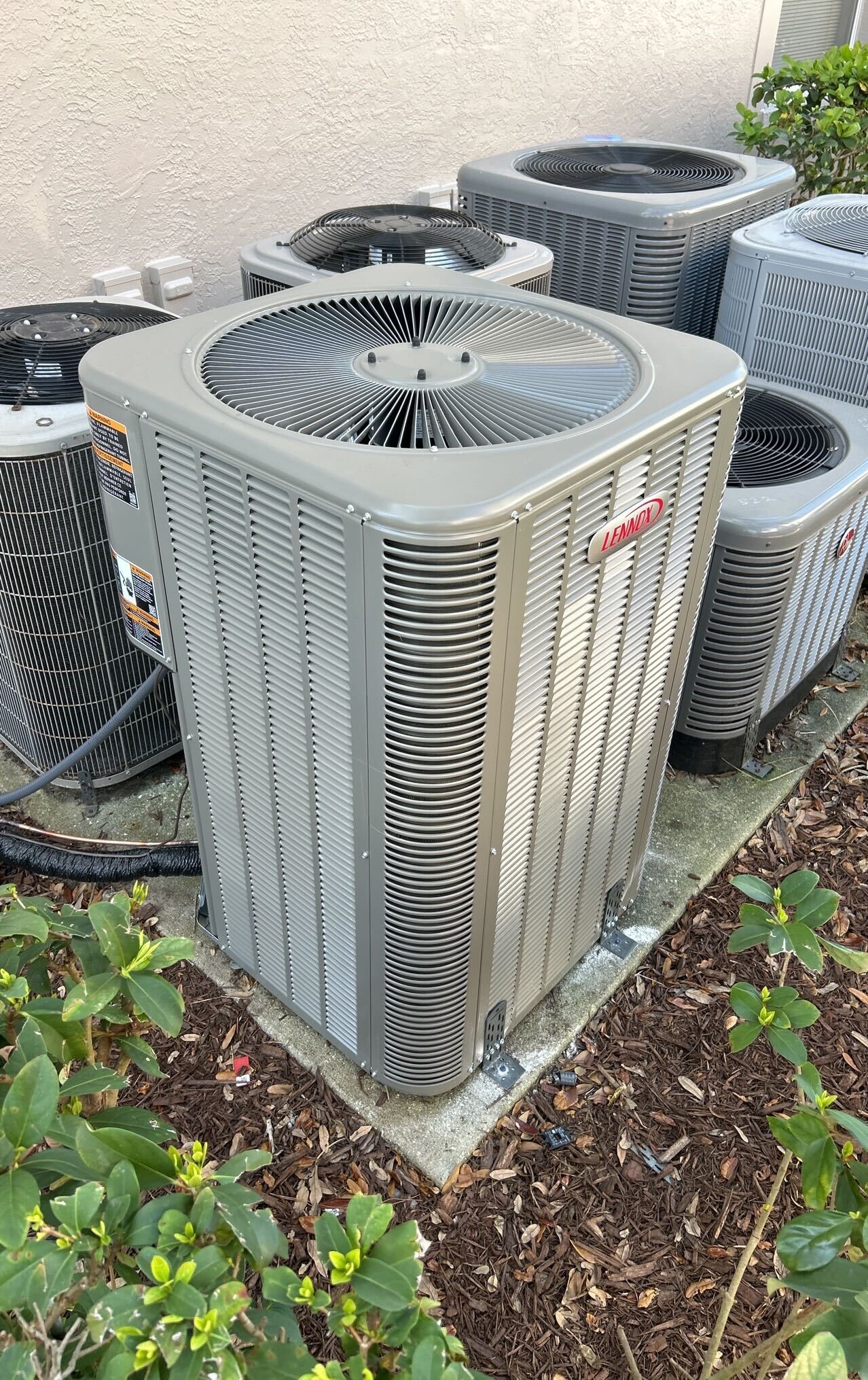
When replacing a system in a salt-air environment, coil material and corrosion protection matter more than they do inland. Rob is specific about available options: "Our partner Lennox has a quantum coil that was tested for 12 years in the salt flats of Puerto Rico in order to support better corrosion resistance, built from a proprietary aluminum blend. There are also coatings and special condensing units from certain manufacturers that are meant specifically to work in coastal environments."
For homeowners preparing to invest in a new system for a waterfront property, Rob recommends asking the HVAC company one direct question before signing anything: why will the system you are proposing improve the overall quality of the air in this home? If the answer only covers energy savings, the conversation is not complete.
Noise reduction, humidity control, and indoor air quality outcomes are all relevant to that question, and a company that cannot speak to those in specific terms may not be the right fit for a high-exposure coastal installation.
According to the U.S. Environmental Protection Agency, inadequate ventilation and moisture management are leading contributors to poor indoor air quality, and HVAC systems that are not properly maintained or sized for their environment compound these risks significantly.
Should you repair or replace? How to think through it honestly
This is the decision where homeowners are most vulnerable to bad advice, and where the incentive structure of the HVAC industry creates the most misaligned guidance. Companies that make more money on replacements push replacement. Companies focused only on the immediate repair revenue do the work without having the real conversation.
Rob frames his position clearly: "We love repairing systems. Repairing a system today and replacing it in a few years is fine. We'll still be here and we'll still take care of that customer. What we don't like is throwing good money at bad equipment."
Florida Statute 559.956 established that HVAC manufacturer warranties transfer automatically with the home for properties conveyed on or after July 1, 2024. If a system is under warranty, the default position should be repair rather than replacement.
However, HVAC warranties are not comprehensive coverage. Parts are typically covered. Labor is usually not covered after the first 90 days. Refrigerant and consumables are not covered at any point. A warranty repair involving a failed compressor can still cost several thousand dollars in labor alone, even when the part itself is covered.
Understanding the full out-of-pocket AC repair cost in Florida, not just whether parts are covered, is essential before deciding. Rob's approach when a system is still under warranty but the repair is running into several thousand dollars: present the homeowner with both options honestly, with the full cost of the repair and the cost of a new system with a fresh 10-year warranty side by side.
For systems out of warranty or facing major component repairs, a straightforward calculation clarifies the decision. Multiply the estimated repair cost by the age of the system in years. If the result exceeds $5,000, the long-term cost of ownership generally favors replacement over repair.
Small repairs, such as a capacitor, a contactor, or a float switch, should almost always be completed regardless of system age. The calculation becomes significant when facing:
When these repairs approach 20 to 30 percent of the cost of a new system, a central HVAC replacement with a fresh 10-year manufacturer warranty often delivers better long-term value. Rob is direct: "Those costs of the repair are so high that it gets you 20 to 30 percent towards a brand-new system with a brand-new 10-year warranty and the likelihood of a lot less problems."
According to ENERGY STAR, replacing aging or failing HVAC equipment with an energy-efficient model can cut annual energy costs meaningfully, and improper installation can reduce system efficiency by up to 30 percent, which directly affects the long-term value of any replacement investment.
There is a category of system where repair is not a practical choice, not because of cost alone, but because of physical condition. A system that is 15 to 18 years old, heavily corroded from salt air, and running on an older refrigerant type may be too deteriorated to disassemble safely without risking damage to components that were still functional.
Rob draws the line clearly: "We warranty our work for a year. We have to trust that the repair is going to last for that year and not cause undue damage to the rest of the system when we're repairing it. We won't take apart a 12 to 14-year-old system near salt air that's corroded and falling apart if there's a high risk we'll cause more damage and can't stand behind the outcome."
A system Gary Air will not repair, they will replace. Declining to repair is not the end of the conversation. It is an honest statement that the system has reached the point where replacement is the only path to a warranted outcome.
What to ask before you hire any HVAC company in Sarasota
As a homeowner himself, Rob's frame is consistent: "I know what it's like trying to get service providers to show up, do quality work, and then answer the phone after they've been paid. That lens drives how we run the company."
The questions you ask an HVAC company in Sarasota before committing matter more than most homeowners realize. Before making any decision, ask these directly:
Rob identifies sizing errors as a systemic problem in this market: "The easiest mistake is just replacing the old system with the same size system without re-evaluating the home." Builder sizing assumptions are often wrong from the start, and homes change over time. Upgraded windows, added insulation, and modified floor plans all affect thermal load.
Oversizing creates its own problems. A system too large for the space short-cycles, which reduces its ability to dehumidify properly, creates pressure imbalances in the duct system, and puts repetitive mechanical stress on components. HVAC airflow balancing is a diagnostic step that often surfaces these pressure and sizing mismatches before they cause equipment failures.
Rob's description is precise: "Bigger systems need more airflow. If the return size and ductwork can't support it, you create pressure issues and airflow problems and the system breaks down or performs poorly. HVAC is a balancing act, and a lot of companies take the easy route."
When evaluating a new installation, ask the company to explain how they sized the system and what methodology they used. If the answer is square footage alone, without reference to insulation values, window ratings, and duct design, that is a gap worth questioning. A full AC installation process should include a Manual J load calculation, not a rule-of-thumb square footage estimate.
A significant portion of the HVAC market in Sarasota has been consolidated by private equity groups. Rob is direct about what changes with that model: "We're not 'churn and burn,' we're not just focused on revenue, and we're not fine losing customers because marketing will replace them. We retain customers because we're honest and we stand behind our work."
Gary Air is family-owned, veteran-owned, and locally operated. The company hires experienced, licensed, insured, and drug-tested technicians, pulls permits on installations, and schedules 90-minute to two-hour appointment windows rather than stacking rushed back-to-back calls.
The practical expression of that standard is specific. If Gary Air can identify that something was done incorrectly on their part and it caused a problem, they cover it at no charge to the homeowner. That level of accountability is not standard practice in a volume-driven business model, and it reflects a company structure where the owner answers the phone and knows what it feels like to be on the other side of a service call that went wrong.
Conclusion
Owning a home in Sarasota means accepting that the climate will work against your AC system in ways that do not apply almost anywhere else in the country. High runtime, relentless humidity, organic drain line growth, and salt air corrosion create overlapping pressures that shorten equipment life, increase failure frequency, and make every deferred maintenance decision more expensive than it would be in a cooler, drier market.
The homeowners who get the most out of their systems here are not the ones who spend the most. They are the ones who maintain consistently on a six-month schedule rather than an annual one, who understand what the warranty on their system actually covers before they face a major repair decision, who know the rule of 5,000 before a technician gives them a quote, and who can tell a dispatcher whether the indoor blower is running before a technician even rolls the truck.
This guide is designed to be the resource you return to at each stage of AC ownership in this climate: when you move in and need to assess what you inherited, when something stops working and you want to think through it clearly, when a maintenance visit comes up and you want to know what to expect, and when the repair-versus-replace conversation arrives and you need an honest framework.
Understanding the full picture, from why Florida accelerates wear at the component level to what a legitimate maintenance visit actually covers to how coastal lifespan expectations differ from inland ones, puts you in a position to make better decisions at every stage.
If you are ready to schedule a tune-up, get a second opinion, or talk through a repair or replacement decision, contact Gary Air.
As a locally owned, veteran-operated company serving Sarasota, Bradenton, and the surrounding coastal communities, Gary Air brings firsthand knowledge of what this environment actually does to HVAC equipment, and the commitment to stand behind every job they take.