The standard advice you will find on almost every national HVAC website is the same: service your air conditioner once a year, ideally in the spring before cooling season begins. That recommendation is not wrong for most of the country.
For Sarasota homeowners, it is not enough, and the gap between what that advice produces and what this climate actually requires shows up reliably every July in the form of emergency calls, drain line shutdowns, and motors that failed three months after the annual visit cleared them.
In this article, Rob Brooks, owner and veteran technician at Gary Air, explains why the Florida maintenance interval is different, what the twice-yearly schedule is actually protecting against, what a thorough maintenance visit covers versus what a low-quality one misses, and what the honest case is for a membership plan over one-time service calls.
Through the topics below, you'll learn exactly what separates a system that runs cleanly through a Sarasota summer from one that fails in the middle of it.
Keep reading to understand the maintenance standard this climate requires, and why the difference between a six-month and a twelve-month interval matters more here than anywhere else.
Why once a year is not enough in this climate
The once-a-year maintenance interval became the industry standard in climates where air conditioners run seasonally. In those markets, a spring tune-up before cooling season and a winter shutdown inspection make sense because the system genuinely rests for months. In Sarasota, that logic does not apply. The system never meaningfully rests, and the conditions inside it during operation create problems on a timeline that a twelve-month service interval cannot catch in time.
Rob Brooks states the local reality in direct terms: "Things start clogging back up within four or five months."
That is not a general observation. It is the specific interval Gary Air has identified through service calls across Sarasota over years of maintenance work: the point at which condensate drain lines that were professionally cleaned begin accumulating enough organic growth to meaningfully restrict flow, and at which coil surfaces that were cleaned at the prior visit have accumulated enough particulate to begin affecting temperature split.
A homeowner on a once-a-year schedule who had their system serviced in October is arriving at the following July with a drain line that has been partially restricted for two to three months and a coil that has been accumulating material since February. The system has been working harder than it should for months before the summer load even peaks. When that load arrives, the margin for error is gone.
According to the U.S. Department of Energy, a dirty evaporator coil can reduce an air conditioning system's efficiency by as much as 30 percent, and clogged condensate drains can cause water damage and significantly worsen indoor humidity levels. In Florida, both of those conditions can develop within a single season between annual visits.
A system that runs 2,400 hours a year accumulates wear at a fundamentally different rate than one that runs 1,000. The maintenance interval that is appropriate for the lower-runtime system is not appropriate for the higher one.
This is not a principle specific to HVAC equipment: any mechanical system that operates at high utilization requires more frequent inspection than one that operates intermittently.
The components most directly affected by this are the condensate drain system, the evaporator coil, the capacitor, and the blower motor. Each of these reaches a degraded state faster under high-runtime conditions.
The drain line accumulates organic growth at a rate proportional to the volume of moisture moving through it daily, which in Florida is 7 to 10 gallons. The evaporator coil accumulates particulate at a rate proportional to the volume of air moving across it, which in a system running 14 hours a day is substantially higher than in one running 6.
The AC inspection in Florida that matters most is the one scheduled in March or early April, before peak load begins. A system that enters June in clean condition, with a clear drain line, tested capacitor, and verified refrigerant charge, has the margin to handle the summer. One that enters June with three months of accumulated restriction does not.
The cost of a professional maintenance visit in the Sarasota market runs $100 to $200 depending on the company and what the visit includes. The cost of an emergency service call on a weeknight in July, for a drain line shutdown that the maintenance visit would have caught, starts at $200 to $300 for the call itself and rises from there depending on what the technician finds.
The cost of a blower motor that failed because a dirty coil was causing it to run against reduced airflow: around $1,000.
The preventable-failure math is straightforward. Rob frames it directly: "It's very costly to have an air conditioning company come out on a service call. It's much cheaper to plan ahead of time and have a maintenance done and have your drain lines cleaned and prepared for the summer season."
According to ENERGY STAR, dirty coils reduce a system's ability to cool the home and cause it to run longer, increasing both energy costs and the rate of equipment wear. In Florida's climate, that increased runtime happens on top of an already elevated baseline, compounding the energy and wear cost of a missed maintenance visit faster than it would in a moderate climate.
What happens inside the system between visits
Most of what goes wrong in a Sarasota HVAC system between service visits is invisible to the homeowner until it produces a failure. Understanding what is accumulating and deteriorating in the weeks and months after a maintenance visit is what makes the twice-yearly schedule feel like a practical decision rather than an upsell.
A condensate drain line that was professionally flushed at a maintenance visit does not stay clear indefinitely. The conditions inside the drain system, warm temperatures, standing moisture, organic material from the air stream, are ideal for biological growth.
Algae and other organic material begin colonizing the drain line within weeks of a cleaning. The growth is slow at first and does not meaningfully restrict flow. By month three or four, the restriction has reached the point where flow is reduced. By month five or six, in many Florida homes, the backup is complete enough to activate the float switch.
The float switch is designed to shut the system off when water in the drain pan reaches a level that risks overflow into the home. It works exactly as intended. The problem is that the homeowner experiences this as a sudden system failure, often on a hot afternoon, when the actual cause has been developing for months.
Rob is specific about the preventive measure homeowners can take between visits: flushing accessible drain lines with a diluted hot vinegar solution inhibits organic growth without introducing chemicals that could damage system components. What not to use is equally important:
"Residue from harsh drain cleaners can remain in the drain line, get pulled back into the air handler when the blower runs, corrode components like coils, and potentially introduce chemicals into the air stream. If it's a serious clog, it's better to have a pro clean it with the right tools."
The signs your AC is struggling with a blocked condensate line typically appear in the days before a full shutdown: the system seems to run more than usual, indoor humidity is slightly elevated, or the drain pan has visible moisture around it. Recognizing those indicators before the float switch activates avoids the emergency call entirely.
The evaporator coil and the condenser coil both accumulate material between service visits, but they do so through different mechanisms and at different rates.
The evaporator coil accumulates particulate from the indoor air stream. Every cubic foot of air that passes across the coil carries dust, skin cells, pet dander, and in Florida's climate, organic spores that thrive in the moisture on the coil surface.
Over months, this material builds into a layer that insulates the coil from the air it is supposed to cool. The temperature split between supply and return air narrows. The system runs longer to compensate. The blower motor works against increased resistance. The compressor cycles more frequently.
The condenser coil, located in the outdoor unit, accumulates material from the exterior environment: dust, grass clippings, seed pods, and in coastal locations, salt deposits. A restricted condenser coil cannot reject heat efficiently, which raises the system's operating pressure and temperatures.
According to the U.S. Environmental Protection Agency, HVAC systems with restricted airflow due to dirty coils or inadequate filtration circulate contaminants more effectively through the living space, degrading indoor air quality even when the system appears to be operating normally.
Cleaning condenser coils is a standard maintenance task, but the quality of the cleaning matters as much as whether it is done. A coil that is hosed down from the outside is not the same as one that has been cleaned from the inside out with appropriate coil cleaner and adequate rinse time.
Capacitors are electrochemical components whose internal materials degrade with heat exposure over time. In Florida, where outdoor units sit in direct sun and run for extended hours in high-temperature conditions, capacitor degradation is faster than in any other climate category.
A capacitor that is approaching end of life does not fail suddenly in most cases. It degrades progressively: its measured capacitance drops below the rated value, the motors it serves struggle more on startup, and the electrical load on the system increases.
A technician who is measuring capacitor values at each maintenance visit catches this before it produces a hard failure. One who is not measuring values, or who is checking the capacitor visually rather than with a meter, is not catching it.
Rob's approach is proactive: if a capacitor is reading at reduced capacity during a maintenance visit, it is replaced before peak season rather than left in service. The AC capacitor replacement in Sarasota decision is not complicated when a measured reading supports it. What is complicated is missing the degradation entirely because the right measurement was not taken.
What a complete maintenance visit actually includes
There is a significant difference between a maintenance visit and a thorough one. The distinction matters in Florida more than in any other market because the stakes of a missed item are higher here, and because the failure chain that an incomplete visit enables tends to produce emergency calls within weeks.
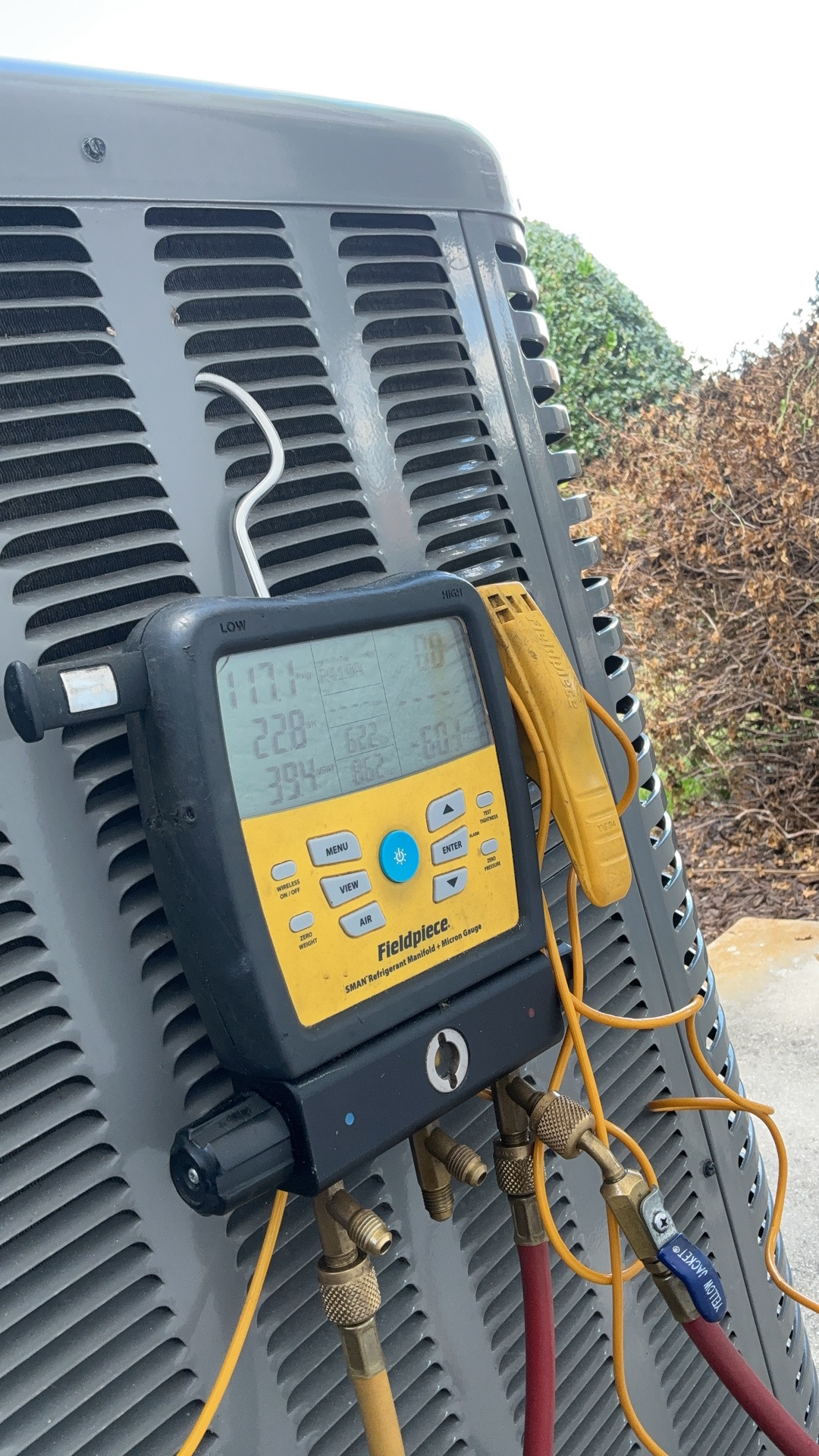
Rob describes the scope of a complete visit: "We inspect refrigerant levels, thermostat operation and configuration, wiring, contactors, relays, and key electrical components. We inspect and clean coils, evaporator and condenser, check fan components, and test the system in both cooling and heating. We clean drain-related buildup and anything affecting airflow."
A complete maintenance visit covers, at minimum:
The annual HVAC inspection that finds something before it fails is categorically different from one that documents what is already working. The goal of a maintenance visit is not confirmation. It is early detection.
The evaporator coil inside the air handler is the single most commonly neglected item in low-quality maintenance visits. It sits inside a tight cabinet, often with limited clearance between the coil face and the cabinet walls, and cleaning it correctly takes significantly more time than a quick-turnaround visit schedule allows.
The failure mode that results from inadequate inside coil cleaning is specific and predictable. A technician who sprays coil cleaner on the evaporator coil and leaves without properly rinsing it does not leave a clean coil
. The cleaner dislodges organic material and particulate from the coil surface, and that material does not disappear. It falls off the coil surface after the technician leaves, collects in the drain pan, and washes into the condensate drain line where it contributes to the next blockage.
Rob is precise about the consequence: "What it does is it actually falls off the coil after they leave and then it blocks the condensate line and stops the system from running. A clean air conditioner just lasts longer, but it is extra work to get into the corners and get into the drain pans and make sure the cleaning is thorough."
This means a homeowner who paid for a maintenance visit can experience a drain line shutdown within days of that visit, not because maintenance was skipped, but because the maintenance was done incorrectly.
Asking a company specifically how they clean the inside coil, what chemicals they use, how they rinse, and how they confirm the drain line is clear after coil cleaning, distinguishes a thorough provider from one who is moving through jobs on volume.
Rob describes the most common finding when Gary Air is called in after another company has been maintaining a system: "A dirty evaporator coil that was not cleaned thoroughly is the most common critical finding. The inside coil is difficult to access, and technicians who spray it with cleaner and leave without flushing it properly are not finishing the job."
The second most common finding is a capacitor that was never tested with a meter. A visual inspection of a capacitor provides no useful diagnostic information. Capacitors that are within weeks of failure look identical to capacitors that will run for another two years. Only a measured reading of capacitance against the rated value tells the story.
Third is a drain line that was flushed at the access point but not confirmed to be flowing clearly at the outlet. A partially cleared drain line that was documented as clean will produce a float switch shutdown within weeks in Florida's climate.
AC filter changes, indoor air quality, and their connection to system health
AC filters and indoor air quality are often discussed as comfort topics. In Florida's climate, they are maintenance topics, because filter condition and indoor air quality directly affect how fast the system accumulates the problems that drive unscheduled service calls.
A filter that is past its effective service life does not just reduce indoor air quality. It restricts the airflow across the evaporator coil, increases the static pressure the blower motor must work against, and accelerates the coil surface accumulation that professional maintenance is trying to manage.
The filter change interval recommended on most filter packaging, 90 days, is calibrated for a national average of system runtime and indoor air particulate load. In Florida, where systems run year-round at high utilization, homes with pets, high occupancy, or proximity to construction or landscaping activity may need filter changes every 30 to 45 days to maintain the airflow conditions a clean coil requires.
According to the U.S. Environmental Protection Agency, high-efficiency air filters with MERV ratings between 9 and 12 capture a significantly larger fraction of airborne particulate than standard fiberglass filters, reducing both the particulate load reaching the evaporator coil and the concentration of contaminants circulating through the living space.
The tradeoff is that higher-MERV filters restrict airflow more than lower-rated ones, which means the blower motor must work slightly harder. In a well-maintained system, this tradeoff is favorable. In a system with an already restricted coil or an aging blower motor, it can accelerate problems.
The benefits of regular AC filter changes in Florida extend beyond the filter itself: they are one of the most accessible maintenance actions a homeowner can take between professional visits to slow the accumulation rate on coil surfaces and maintain the airflow conditions the system was designed to operate in.
Rob describes what he notices immediately when he walks into a home where the system has not been maintained on the right interval: the air quality has changed in ways the homeowner has adapted to rather than noticed.
"You can really tell the difference when there's a clean air conditioning system. Airflow is clean, humidity is low, the system is running really well. But over time, we live in our homes and we get used to the smell, get used to the dampness, maybe get used to the dust and dander that is in our duct systems."
The organic growth that develops in drain pans and on coil surfaces when maintenance is deferred does not stay in the drain system. It gets disturbed by airflow and circulated through the duct system. Dust, dander, and particulate that accumulate on coil surfaces become part of the air stream every time the blower runs. In a climate where the blower runs for 14 or more hours per day, the cumulative effect on indoor air quality over a maintenance interval that has stretched to 12 months is significant.
Upgrades like air purifier installation with UV or carbon-based technology address the organic and chemical components of indoor air quality that filter changes alone cannot capture. In a climate where drain pans and coil surfaces are perpetually moist and warm, UV systems provide a continuous inhibitory effect on organic growth at the point in the air handler where that growth is most likely to colonize.
They are not a substitute for proper coil cleaning, but they meaningfully extend the interval before organic growth reaches levels that affect air quality or drain line function.
A residential air conditioning system that is serviced on the correct interval, with coils that are genuinely clean, a drain line that is clear, a capacitor that has been tested and replaced on a measured schedule, and a blower motor that is operating within its rated amp draw, produces a measurable difference in the home.
Indoor humidity is lower and more consistent. Temperature split across the air handler runs at or near the expected 18 to 20 degrees Fahrenheit rather than the 7 to 8 that a restricted system delivers.
Runtime per cycle is shorter because the system is conditioning air efficiently rather than fighting through accumulated resistance. Energy costs are lower, and the compressor is not accumulating the excess wear that comes from extended runtime against reduced efficiency.
The guide to improving indoor air quality with your AC system connects these mechanical outcomes to the comfort and health conditions a homeowner actually experiences: a clean system is not just more reliable, it is producing fundamentally different air than one that is running past its service interval.
The honest case for a membership plan versus one-time visits
A one-time maintenance visit delivers the service at a point in time. A membership plan delivers the service on schedule, with continuity, and with the additional operational benefits that come from a company that knows the system's history before they arrive.
Rob explains the difference: "What it does is it allows us to regularly have a Gary technician in the home, which gives us a better understanding of the history of the system. When things go wrong, because they inevitably will, we'll have a better understanding of that system."
That history matters for diagnostics. A technician who has the capacitor readings from the last two visits and can see that the values have been trending downward has information that an emergency call technician does not.
A technician who knows that the drain line at a particular home tends to clog faster than average because of the duct configuration can take a more thorough approach to the cleaning on that home specifically.
One-time visits provide the service without that context. In most cases that is sufficient. In the cases where a system has a pattern, a recurring tendency, a component that is on a faster degradation curve than typical, the continuity of a membership relationship is what catches it before it produces a failure.
Gary Air's AC maintenance plan in Sarasota covers twice-yearly service visits, repair discounts scaled by plan length, and access to emergency dispatch hours on nights and weekends, which are reserved exclusively for plan members. Every dollar spent on the plan applies toward a future system replacement.
The emergency dispatch access is the membership benefit that is hardest to replicate with one-time visits. During peak season, when demand for service is highest and wait times on open service calls are measured in days, plan members are scheduled in a separate queue. That access has a different value in July than it does in February.
Rob describes the pattern he sees most often: a homeowner calls for emergency service in July, the problem is resolved, and the conversation about a maintenance plan happens in the context of a crisis that a plan would have prevented. The plan makes economic sense at that point. It made more sense six months earlier.
The calculation is simple. Two visits per year at current market rates, plus the repair discounts that apply to plan members, typically produces a lower total annual spend on HVAC service than a one-time visit plus one emergency call. The emergency call is not guaranteed. But in Florida's climate, on a system that is not maintained at the right interval, it is probable enough to factor in.
Conclusion
The maintenance interval that protects an HVAC system in Sarasota is not the one on the national standard. It is calibrated to a climate where systems run year-round at high utilization, where drain lines accumulate organic growth on a four-to-five-month timeline, where capacitors degrade faster under sustained heat load, and where the cost of a missed item in April is typically an emergency call in July.
The twice-yearly schedule is not a product of the HVAC industry's interest in selling more visits. It is the specific interval at which the failure chain that Florida's climate produces, drain line backup, coil restriction, capacitor failure, motor strain, can be caught and corrected before it produces an unscheduled breakdown. Every homeowner who has been on a once-a-year schedule and experienced a summer emergency call has effectively demonstrated the gap.
What a thorough maintenance visit provides, and what a rushed one misses, is the difference between a system that runs cleanly through a Sarasota summer and one that fails in the middle of it. Asking the right questions about coil cleaning method, capacitor testing practice, and drain line confirmation before committing to a maintenance provider is the most effective single step a homeowner can take toward closing that gap.
If you are ready to schedule a maintenance visit or want to understand what a Gary Air clean and tune actually covers, contact Gary Air.
As a locally owned, veteran-operated company serving Sarasota, Bradenton, and the surrounding coastal communities, Gary Air maintains systems on the interval and at the standard this climate requires.