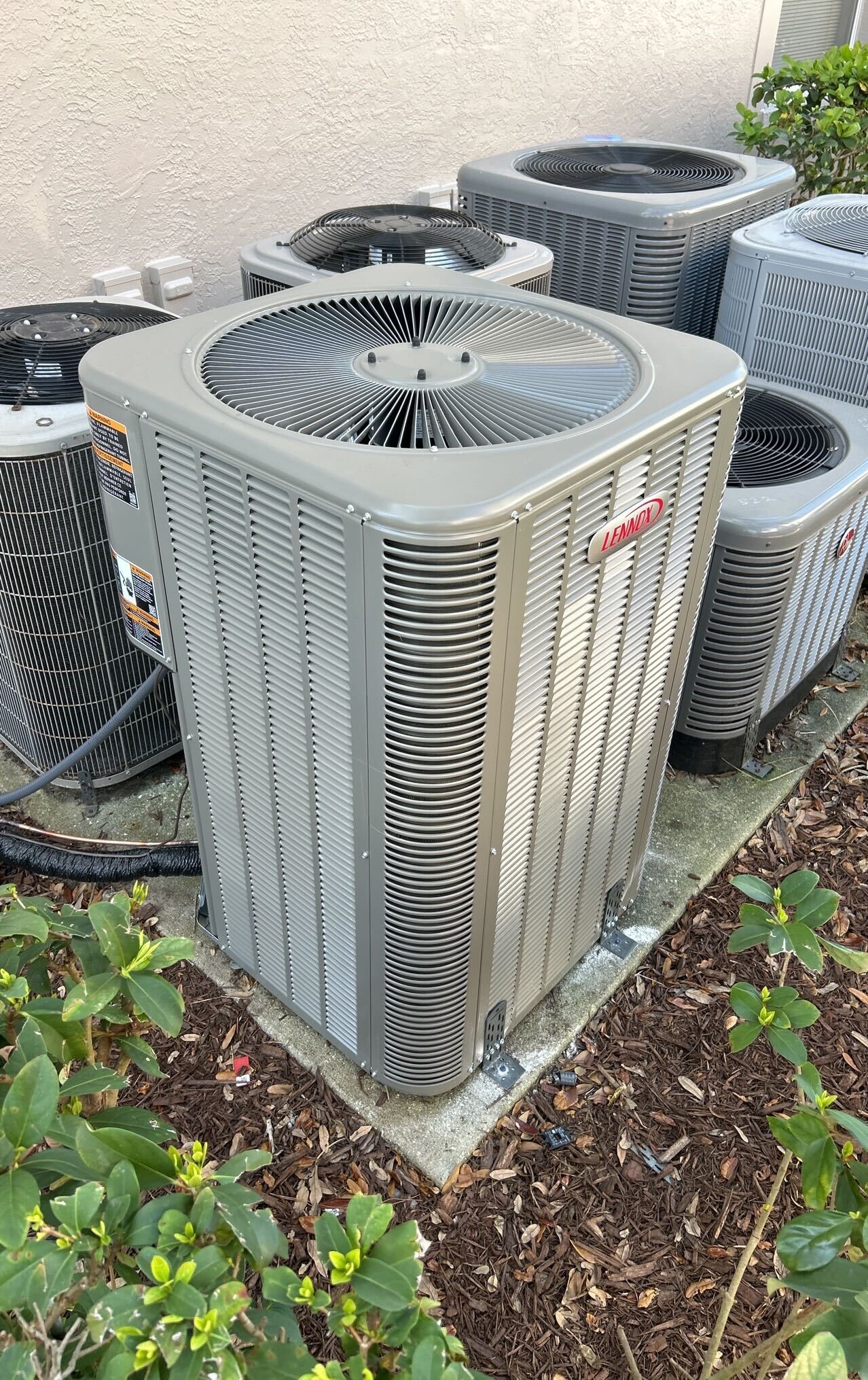
If your air conditioner was running fine for years before you moved to Sarasota and is now failing every season, the system is not defective. The climate is. Homeowners who relocate from the Midwest or the Northeast bring a set of assumptions about AC performance that simply do not hold here, and that mismatch costs real money every summer in repairs that were, in most cases, entirely preventable.
In this article, Rob Brooks, owner and veteran technician at Gary Air, explains the specific environmental conditions that accelerate wear on residential HVAC systems in this market, why a system that would last 20 years in Michigan might need replacing in 10, and what the failure patterns look like when those conditions go unmanaged.
Here's what you need to know.
Keep reading to understand exactly why Florida is different, and what that difference means for every decision you make about your system.
What makes Florida's climate so much harder on AC systems
Most general HVAC advice is written for a national average that does not include Florida. The combination of runtime, humidity load, and coastal salt air exposure that defines Sarasota creates a set of stresses that compound on each other in ways that single-variable guidance cannot account for. Understanding them together is what makes the difference between homeowners who get 12 years out of a system and homeowners who get 7.
Rob Brooks frames the contrast plainly: "Up north, an AC might run a few months out of the year. Here it runs a lot of hours, in heat, in humidity, and often near salt air."
In a northern climate, a residential central air conditioner typically accumulates 800 to 1,000 operating hours per year. In Sarasota, the same system can run 14 or more hours per day through the summer months, and the cooling season effectively spans most of the calendar year. Annual operating hours in this market regularly exceed 2,400, more than double what the same unit would log in Ohio or Michigan.
Every mechanical component in an HVAC system wears proportionally to hours of operation. Capacitors, blower motors, fan motors, contactors, and refrigerant line connections all have finite operational lives measured in cycles and run-hours, not calendar years.
A system that accumulates twice the annual hours ages at roughly twice the rate. That is not a product defect or a maintenance failure. It is a direct consequence of the usage environment, and it changes every assumption a homeowner carries about when to expect repairs and when to expect replacement.
Florida AC systems do not just cool air. They are constantly removing water from it. According to the U.S. Department of Energy, high-humidity environments require condensate drains to be checked and cleared routinely, because a clogged drain line can cause water damage and significantly affect indoor humidity levels.
In Sarasota, a residential air conditioner can extract 7 to 10 gallons of water from indoor air every single day. That volume of moisture flows continuously through the condensate drain system: through the drain pan under the evaporator coil, through the drain line, and out of the home. The heat and humidity inside that pathway create ideal conditions for organic growth, the algae and biological buildup that gradually restricts and eventually blocks the drain line entirely.
When a drain line backs up to the point where water reaches the float switch, the system shuts off automatically to protect the home from flooding. That shutdown is not a malfunction. It is the system working exactly as designed. But in Sarasota, where HVAC condensation problems develop faster than in any dry-climate market, a drain line that was clear in October can be partially blocked by February without any visible sign to the homeowner.
This is the most common source of emergency calls Gary Air receives each summer, and it is almost entirely preventable with the right maintenance interval. The issue is not that drain lines clog. The issue is that homeowners on a once-a-year maintenance schedule are not catching the clog before it shuts the system down.
High ambient temperatures do not just make the AC work harder. They directly accelerate the degradation of specific components that are already under load.
Capacitors are the clearest example. A capacitor stores and releases the electrical charge that starts and runs the motors in the compressor, blower, and condenser fan. In moderate climates, a capacitor might last five to seven years. In Sarasota, where the outdoor unit sits in direct sun and runs for extended hours in temperatures that regularly exceed 90 degrees, two to three years is a realistic replacement cycle, even on newer equipment.
Rob addresses capacitor degradation proactively during every maintenance visit: if a capacitor is testing at reduced capacity on a meter, he replaces it before peak season rather than waiting for it to fail during a July heat wave. That distinction, between a $150 planned replacement and a $300 emergency call on a Saturday night, is one of the clearest examples of what preventive maintenance actually means in this climate.
Blower and fan motors carry a related risk. When airflow through the system is restricted, whether by a dirty filter, a clogged evaporator coil, or debris around the outdoor condenser unit, motors compensate by increasing RPM against reduced air resistance.
That extra load generates heat inside the motor windings. Over time, it shortens motor life significantly. Because blower motor maintenance in Florida needs to account for the humidity-driven airflow restrictions that accumulate faster here than in other climates, the risk of premature motor failure is substantially higher for homeowners who let coil cleaning slide.
How humidity breaks systems from the inside out
The moisture that Florida's climate forces through HVAC systems does not only threaten drain lines. It affects coils, electrical components, and indoor air quality in ways that are less visible but equally damaging over time. Understanding these mechanisms is what separates a homeowner who can anticipate problems from one who only encounters them after the fact.
The evaporator coil sits inside the air handler and is responsible for absorbing heat from the indoor air as the refrigerant passes through it. In a dry climate, this coil stays relatively clean between service visits. In Florida, the same coil is constantly wet from condensation, and that moisture traps airborne particles: dust, skin cells, pet dander, and organic material from the air stream.
Over time, that accumulation builds into a coating on the coil surface that insulates it from the air it is supposed to cool. The result is a coil that is technically functional but thermally restricted.
The system works harder to achieve less, runtime increases, and the temperature split between supply and return air narrows from the expected 18 to 20 degrees Fahrenheit down to 7 or 8. A dirty evaporator coil producing a weak temperature split is one of the most common findings Gary Air encounters on first visits after another company has been maintaining the system.
Rob is direct about what inadequate coil cleaning looks like in practice: "What it does is it actually falls off the coil after they leave and then it blocks the condensate line and stops the system from running. A clean air conditioner just lasts longer, but it is extra work to get into the corners and get into the drain pans and make sure the cleaning is thorough."
A maintenance visit where the inside coil is sprayed and left without being properly flushed does not just fail to help. It can directly cause a drain line shutdown within days of the visit.
Humidity does not stop at coils and drain pans. It works its way into every part of the system: control boards, contactors, relays, and the low-voltage wiring that connects them. In moderate climates, these components are rarely compromised by moisture alone.
In Florida, and particularly in coastal homes where salt-laden air adds a second corrosive factor, electrical degradation is a common and often underdiagnosed source of intermittent failures.
HVAC systems are extremely sensitive to low-voltage irregularities. A contactor that has developed surface corrosion from humidity exposure may not fail outright but will create voltage drops that affect compressor starting behavior, leading to hard starts, shortened compressor life, and eventually a failure that presents as a compressor problem when the root cause was an electrical one.
The HVAC safety switches in a Florida home, float switches, high-pressure cutoffs, and condensate overflow sensors, are more likely to activate not because of dramatic failures but because of the slow cumulative effects of humidity on the components they monitor.
Homeowners who notice a system that seems to work intermittently, that starts and stops without a clear pattern, or that trips safety switches without an obvious cause, are often dealing with electrical degradation that has been developing for months before the visible symptom appeared.
When an HVAC system in Florida goes unmaintained long enough, the effects show up in the air quality of the home before they show up in the mechanical performance of the equipment. Rob describes what he notices immediately when he walks into a home where the system has not been serviced: the smell of the air changes.
"You can really tell the difference when there's a clean air conditioning system. Airflow is clean, humidity is low, the system is running really well. But over time, we live in our homes and we get used to the smell, get used to the dampness, maybe get used to the dust and dander that is in our duct systems."
All of that accumulated material, the dust, the pet hair, the organic growth in the drain pan and on the coil surfaces, gets circulated through the duct system every time the blower runs. Homeowners often do not notice the gradual change because the deterioration is slow. But the air quality in a home with a neglected system is meaningfully different from one that is maintained on schedule.
Addressing this goes beyond coil cleaning. Upgrades like air purifier installation with UV or carbon-based technology, combined with consistent AC filter changes on the right interval, are the tools that maintain indoor air quality between professional service visits. In a climate where systems run year-round and pull enormous volumes of air through the duct system daily, the filter interval that works in Minnesota is not the same one that works in Sarasota.
Salt air, coastal exposure, and what distance from the water actually means
For homeowners in the communities closest to the Gulf, the standard wear patterns described above are compounded by a second and entirely separate degradation mechanism: salt air corrosion. The way this works, and the way it varies by distance from the water, is something most general HVAC content does not address at all.
An HVAC system is almost entirely metal. Copper refrigerant lines, aluminum evaporator and condenser coils, steel cabinet panels, electrical terminals, and wiring connections all have direct exposure to the air that moves through and around the system. In a salt-air environment, that air carries microscopic salt particles that deposit on every metal surface and initiate electrochemical corrosion.
The most visible consequence is coil failure. Aluminum evaporator and condenser coils develop pinhole leaks when salt corrosion works through the coil material. These leaks allow refrigerant to escape slowly, often over months, until the system is low enough on refrigerant charge that it stops cooling effectively.
Rob described seeing a condenser coil on a unit that was only one year old, installed on the salt-water-facing side of a building directly on the beach, that needed to be replaced entirely because of salt intrusion into the aluminum.
Beyond coils, the electrical system deteriorates in ways that are harder to see.
Rob explains what he observes comparing systems of the same age in different locations: "In Siesta Key versus Lakewood Ranch, we would just see corrosion and deterioration of metal components, and definitely in the electrical system. HVAC systems are very sensitive to low voltage. When you have electrical components that are starting to deteriorate, that low voltage doesn't flow through the electrical wiring correctly."
Refrigerant leaks in coastal homes are not always the result of age or poor installation. They are often the direct result of salt-driven pitting in copper line sets and coil surfaces that would not have occurred in an inland location. When a system is low on refrigerant and no obvious mechanical cause exists, corrosion from salt air exposure is a primary diagnostic consideration.
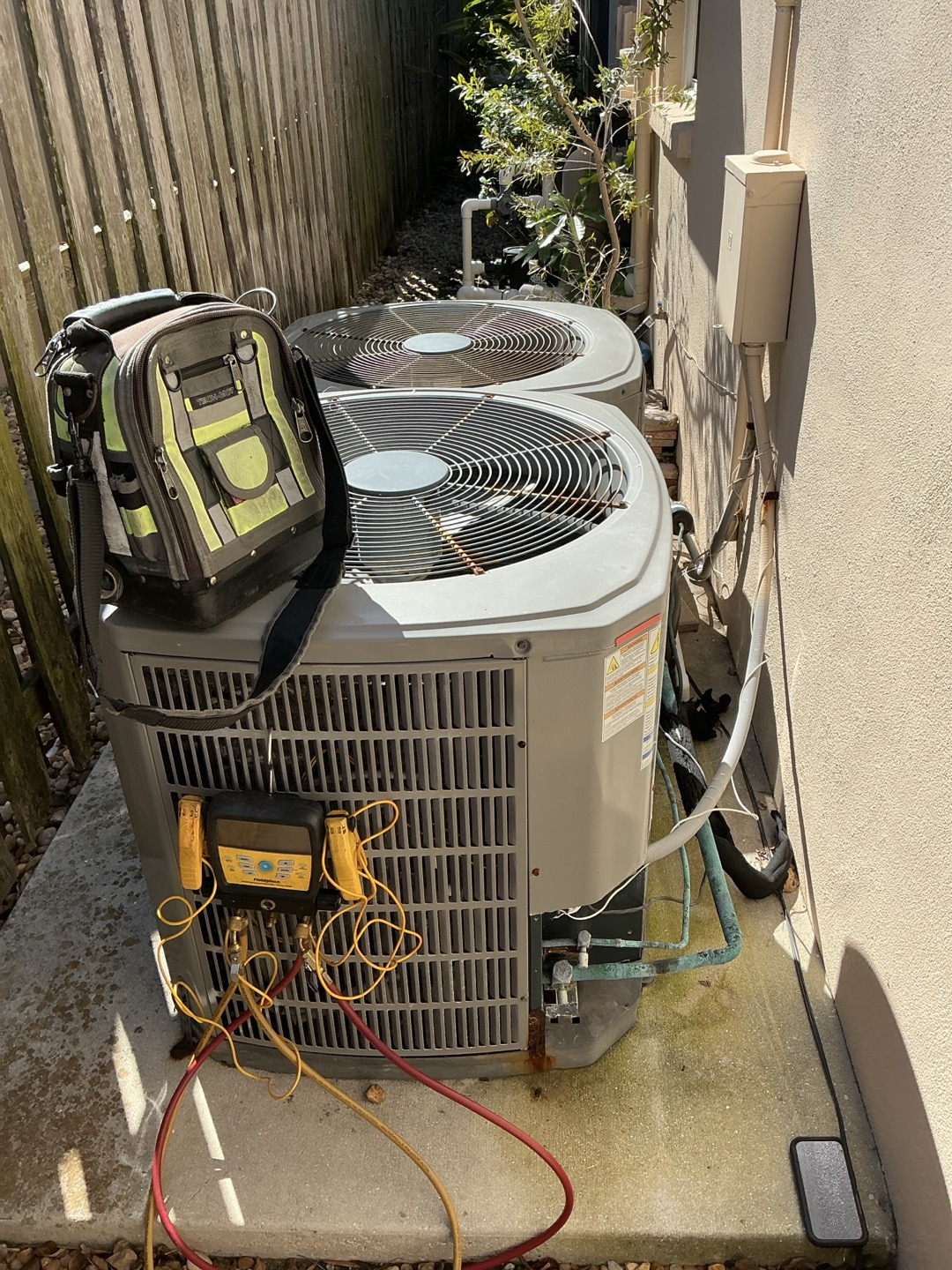
The distance from the water matters in specific, quantifiable ways. For homes on Sarasota's barrier islands — Longboat Key, Siesta Key, Anna Maria Island, Lido Key — the realistic average lifespan of a well-maintained system is 8 to 10 years. Not because the equipment is lower quality, but because constant salt air exposure, combined with the runtime and humidity load described above, puts every metal component under continuous corrosive pressure that nothing fully neutralizes.
Rob is specific about what the 8-to-10-year horizon means for a homeowner who just bought a coastal property: "You can even lean in early at that six-year range to see if there are any components worth changing out to provide some additional longevity. But working with a company that's honest with you about that is really important, because some people will take advantage of those types of customers."
Inland properties in areas like Lakewood Ranch face the same humidity and runtime pressures, but without the salt air load. System lifespan there is closer to national averages, and the AC lifespan extension strategies that work inland are more likely to be effective because corrosion is not actively working against maintenance efforts.
For part-time residents on barrier islands, there is one meaningful offset: a system that sits idle for months accumulates less wear. Rob notes that buyers of part-time residences sometimes inherit longer-lasting systems precisely because the prior owner was only in town seasonally. That credit has limits, but it is real.
When a coastal system reaches replacement, the equipment selected matters more than it does anywhere else in the country. Standard aluminum coils corrode in salt air environments. Coil material, protective coatings, and condenser unit design all affect how long the replacement system lasts.
Rob is specific about what is available: "Our partner Lennox has a quantum coil that was tested for 12 years in the salt flats of Puerto Rico in order to support better corrosion resistance, built from a proprietary aluminum blend. There are also coatings and special condensing units from certain manufacturers that are meant specifically to work in coastal environments."
This is not a conversation most HVAC companies have with coastal homeowners before installation. It is a conversation every coastal homeowner should be initiating before any replacement proposal is signed.
The pattern that plays out when these conditions go unmanaged
The individual failure modes described above do not happen in isolation. In Sarasota's climate, they form a chain. Humidity drives organic growth in drain lines. Organic growth causes drain line backups. Drain line backups trigger float switch shutdowns. Meanwhile, dirty coils restrict airflow.
Restricted airflow strains motors. Strained motors fail prematurely. Salt air corrodes coils and electrical connections. Corroded coils develop refrigerant leaks. Low refrigerant causes the system to run longer at reduced capacity, which accelerates wear on every component that is already under stress.
Rob describes what he sees when he arrives at a home where this pattern has been running unchecked: the system is technically operational but performing well below its rated capacity. Humidity in the home is elevated.
The air has a quality that a maintained system would not produce. The coils are visibly coated. The drain pan has standing water or residue. The capacitor may be reading at reduced capacity on a meter. Any one of these findings alone is manageable. Together, they represent a system that is months away from a compressor or motor failure if nothing changes.
The national standard for HVAC maintenance is one service visit per year. That interval was not designed for Florida. Rob states the local reality directly: "Things start clogging back up within four or five months."
That timeline drives Gary Air's recommendation of twice-yearly service for every Sarasota home. It is not about generating maintenance revenue. It is about the specific interval at which drain lines, coils, and drain pans in this climate reach the threshold where organic growth begins to affect system performance.
A homeowner who schedules service in March and October is catching the clog before it causes a shutdown. A homeowner on a once-a-year October schedule is almost certainly arriving at the next summer with a drain line that has been partially obstructed for months.
Understanding how often to service your air conditioner in Florida compared to the national standard is one of the clearest adjustments a homeowner relocating from another climate needs to make. Most do not make it until after the first emergency call.
A properly executed maintenance visit in April or early May, before peak season load begins, should verify the following at minimum: refrigerant charge, capacitor condition with measured readings, evaporator and condenser coil cleanliness, condensate drain line flow, float switch function, thermostat calibration, blower motor amp draw, and contactor and relay condition.
The top signs your AC needs maintenance before summer are often subtle: slightly longer run times to reach setpoint, a marginal increase in indoor humidity, a weak temperature split that is not yet uncomfortable but is trending in the wrong direction. By the time the system fails outright on a 95-degree afternoon, these early indicators have usually been present for weeks or months. A technician who is checking the right things at the right time catches them. One who is checking boxes quickly does not.
A system under the cumulative strain of Florida's climate does not just perform worse mechanically. It produces lower-quality air. The connection runs in both directions: organic growth in the drain system and on coil surfaces affects air quality, and poor indoor air quality indicators, elevated humidity, dust, and organic material in the air stream, are themselves diagnostic signals that the system is not being maintained at the right interval.
Rob notes that homeowners often adapt to the gradual decline rather than noticing it: "We get used to the smell, get used to the dampness."
That adaptation is exactly what makes Florida-specific maintenance intervals easy to skip and expensive to catch up on. Home high humidity that has been present long enough to feel normal is one of the clearest indicators that the maintenance interval has slipped past what this climate requires.
Addressing it means correcting both the maintenance schedule and, in some cases, the AC humidity control settings that govern how aggressively the system is removing moisture from the air.
Conclusion
The reason AC systems break down faster in Sarasota than almost anywhere else in the country is not one thing. It is the combination of runtime that doubles northern averages, a humidity load that requires constant moisture management, a thermal environment that accelerates capacitor and motor degradation, and, for coastal homes, a salt air exposure that corrodes coils and electrical components on a timeline that standard equipment was not designed for.
Each of these factors is manageable. None of them are reasons to accept constant breakdowns or premature system failure as inevitable. They are reasons to maintain at the right interval, choose the right equipment for the location, and work with a company that understands what this specific environment actually does to the systems they service.
If your system is struggling to keep up, running but not cooling effectively, or due for service before summer load begins, contact Gary Air. As a locally owned, veteran-operated company serving Sarasota, Bradenton, and the surrounding coastal communities, Gary Air brings the firsthand knowledge of this climate that generic HVAC advice simply cannot provide.